
I found kkwarigochu (Korean shishito-style peppers) on sale at the market, so I picked some up to make a batch of steamed peppers tossed in a spicy, savory sauce.
The ingredient list looks a little long, but don’t let that scare you off. This Korean dad is going to walk you through it step by step.
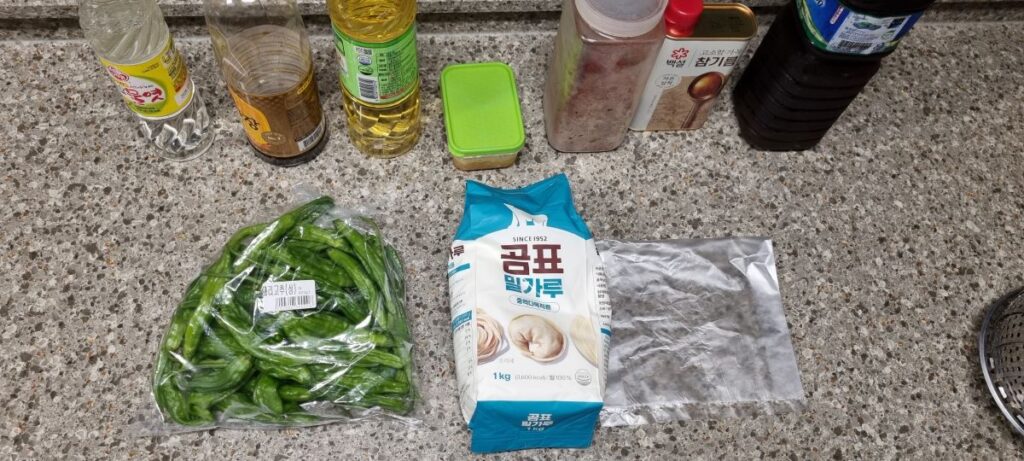
Quick heads up before we start — this one can be pretty spicy, so keep that in mind.
I used a full 400g pack of peppers from the market, so all the measurements below are based on that amount. Want a smaller batch? Just scale the seasoning down proportionally.
Ingredients
▪ 400g shishito peppers
▪ 5 tablespoons flour
▪ 5 tablespoons soy sauce
▪ 2 tablespoons plum syrup (maesil-cheong)
▪ 2 tablespoons Korean chili flakes (gochugaru)
▪ 1 tablespoon minced garlic
▪ 1 tablespoon sesame oil
▪ 2 tablespoons sugar
▪ 2 tablespoons sesame seeds
🔹 All spoon measurements are based on a regular adult-sized spoon.
🔹 No plum syrup? Just add an extra tablespoon of sugar in its place.
Tools
▪ Pot
▪ Steamer
▪ Large bowl
▪ Measuring cup
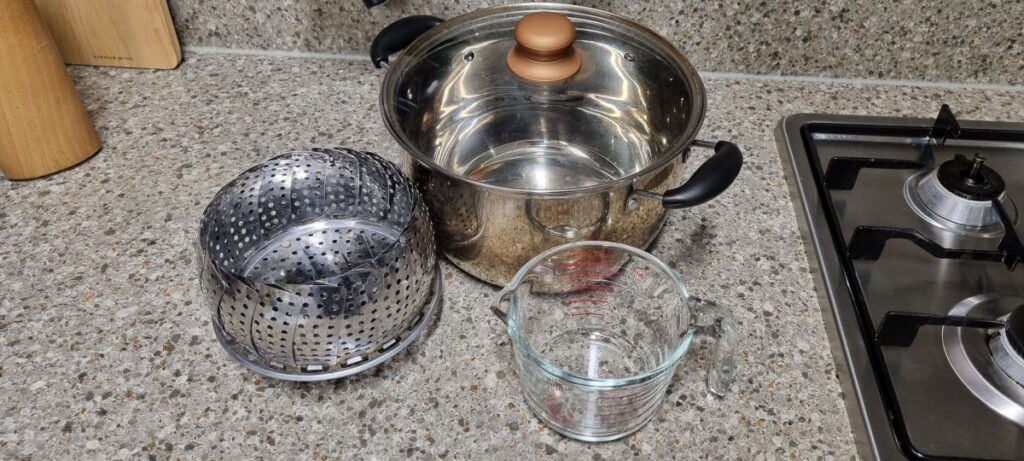
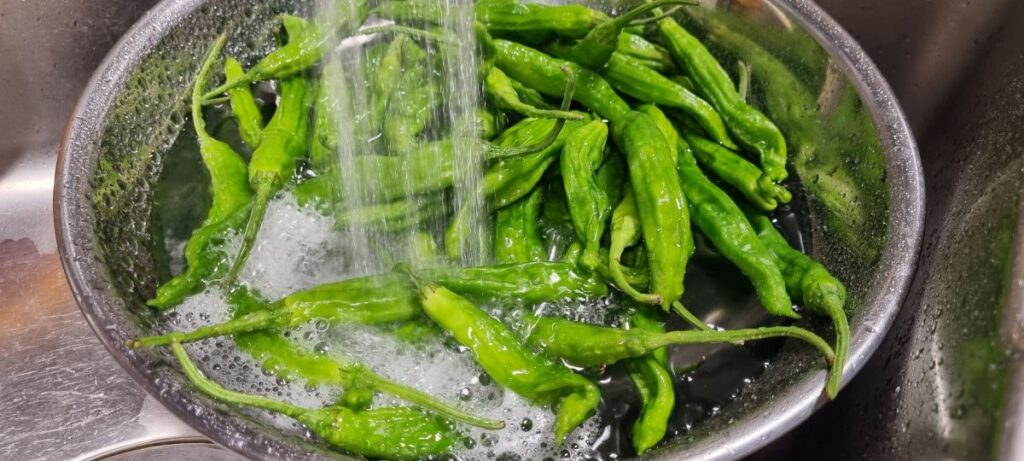
Start by putting the peppers in a large bowl to wash them. Peppers tend to have a fair amount of grime and residue clinging to their skins, so it’s worth giving them a good, thorough wash — more than just a quick rinse.
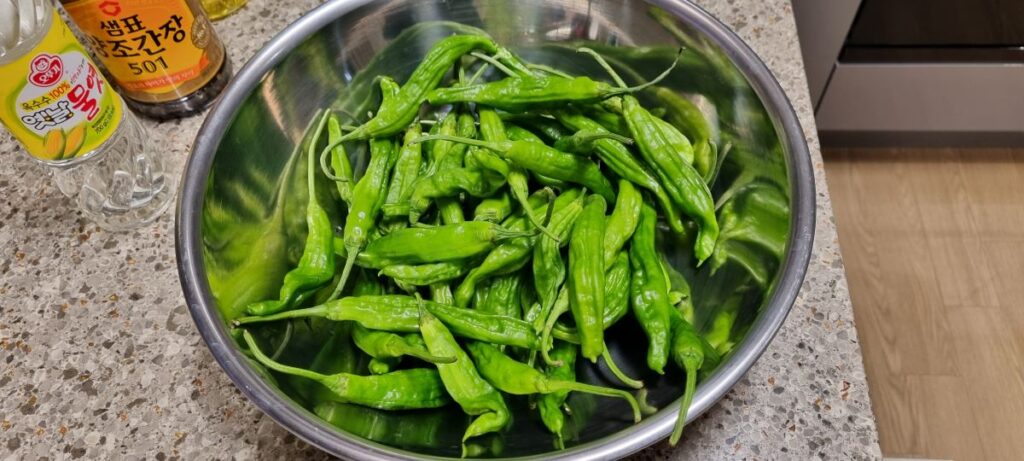
Whenever I wash vegetables or fruit, I like adding vinegar to the water — it just gets things cleaner. Pour about 5 tablespoons of vinegar into a bowl and fill it up with water.
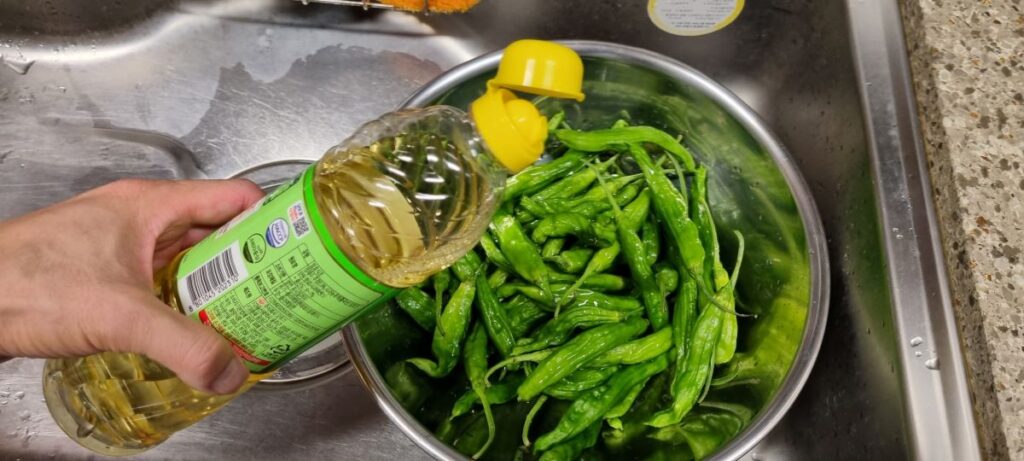
Add enough water to fully submerge the peppers and let them sit for about 2 minutes, flipping them by hand once or twice along the way. I was pretty thorough with this step. After 2 minutes, drain the water, move the peppers to a strainer, and rinse them a few more times under running water.
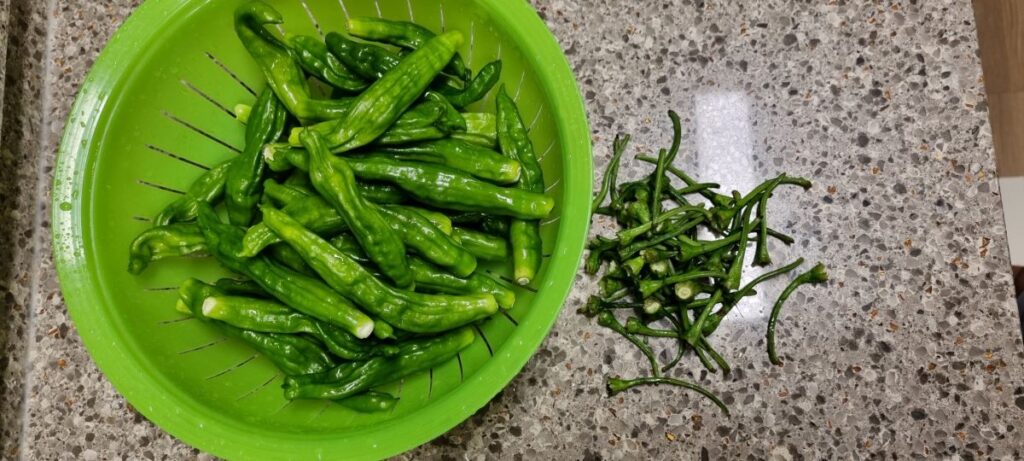
Shake off any extra water in the strainer, then pull off the stems — they snap off easily by hand. Once the stems are off, the peppers are ready to go.
One thing I noticed after making this: the sauce didn’t soak in as much as I wanted. So this time around, after removing the stems, try poking each pepper once in the middle with a fork — it helps the sauce really work its way in.
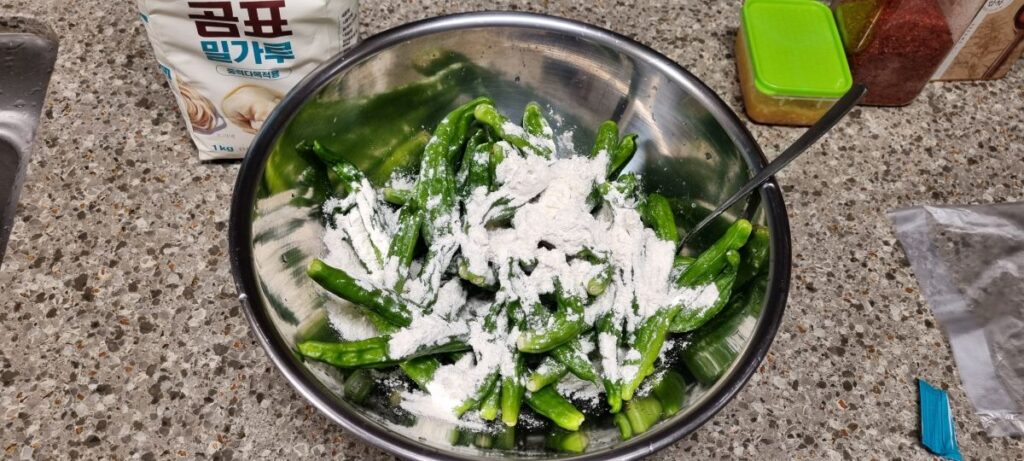
Add the peppers to a large bowl and toss in 4 to 5 tablespoons of flour. An easier way to do this is to put the peppers in a plastic bag, add the flour, tie it shut, and give it a good shake — the flour coats everything much more evenly that way. I actually had a bag ready, but it was too small to fit everything, so I just coated them in the bowl instead.
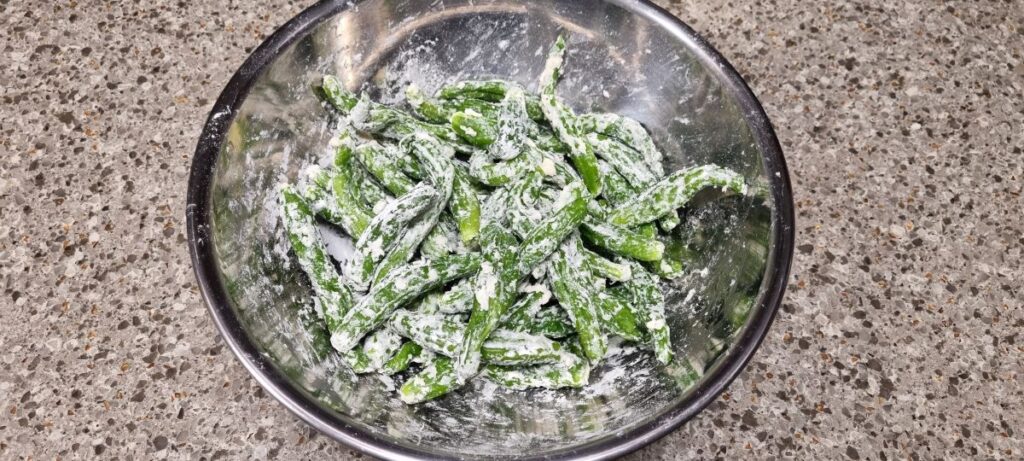
Don’t think of this as a batter — it’s just a light dusting of flour on the peppers. That flour is what helps the sauce cling on later. The moisture still on the peppers from washing actually helps the flour stick nicely too. Get everything prepped this way and set it aside.
Next, you’ll steam the peppers. Fill a large pot (big enough to fit your steamer) with about 400–500ml of water and bring it to a boil. Once it’s boiling, that’s your cue to start steaming — go ahead and set the steamer in.
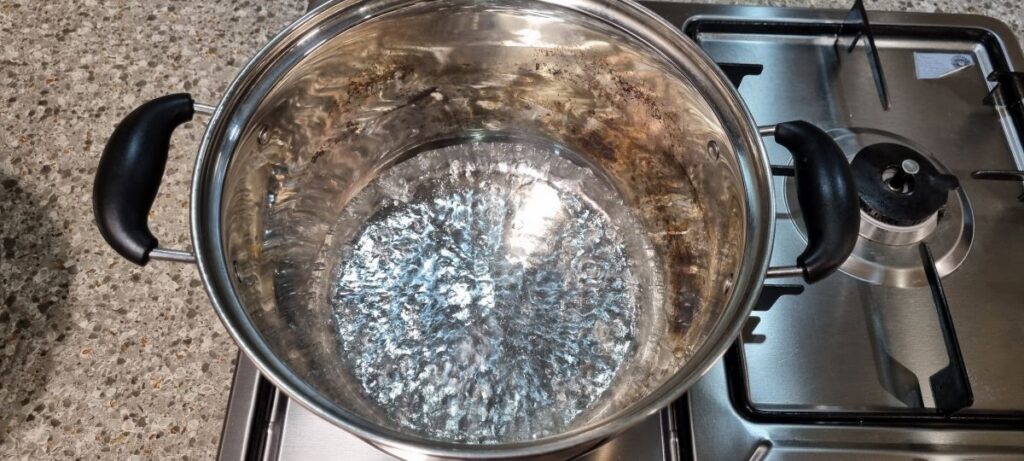
Be careful here — the pot will be hot, so take it slow when placing the steamer in.
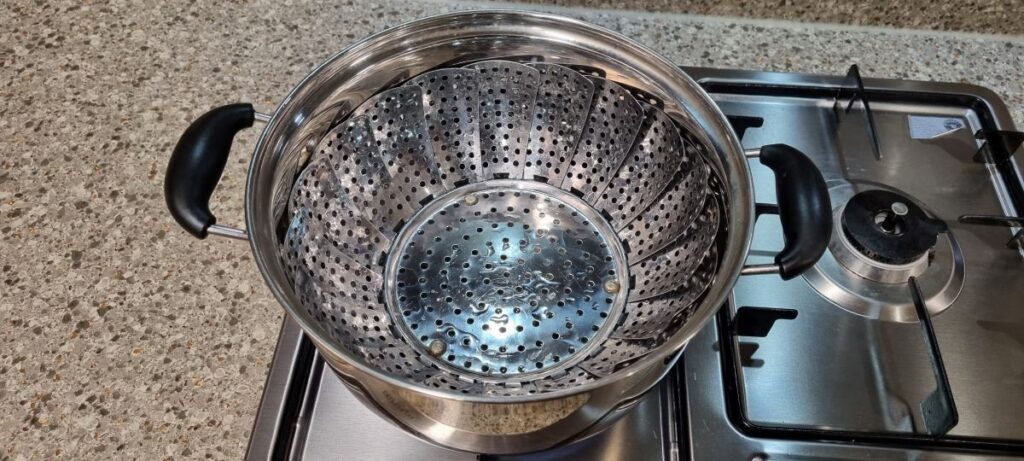
Add the flour-coated peppers on top of the steamer. Instead of dumping the whole bowl in, pick them up by hand and gently shake off any loose flour first — otherwise all that extra flour sitting at the bottom of the bowl ends up in there too. Just be careful of the steam coming up while you do this.
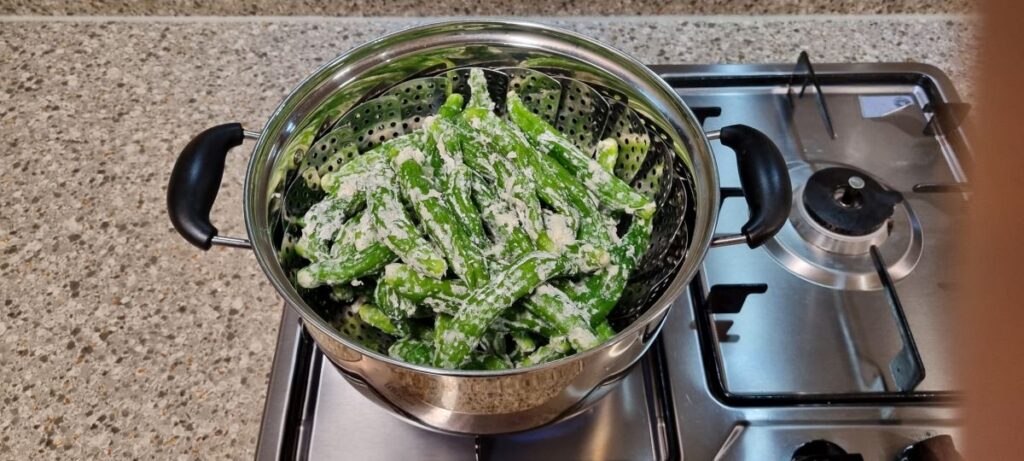
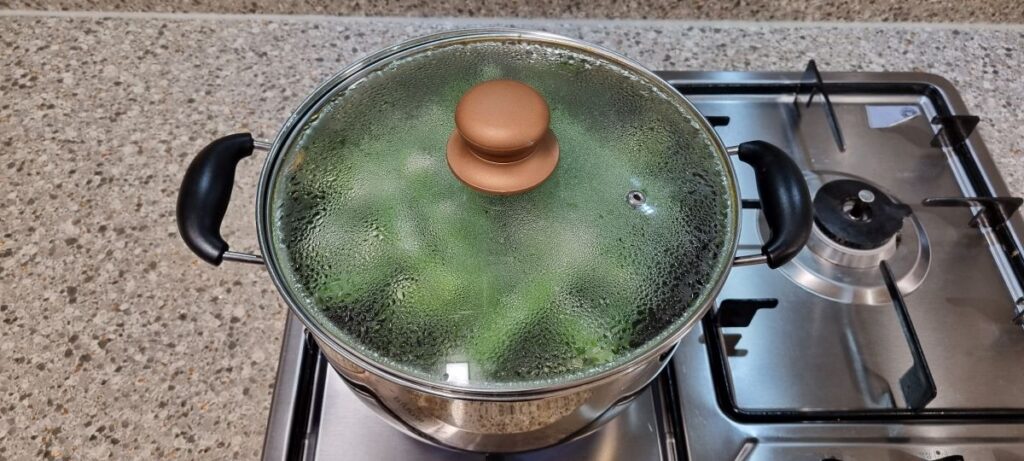
Close the lid and steam for about 5 to 7 minutes. That said, the exact time can vary a bit — here’s why.
Keep it on medium heat with the lid closed. After about 3 minutes, lift the lid and flip the peppers once so they cook evenly all around. Every stove heats a little differently, so it’s worth checking as you go rather than setting a strict timer. Around the 5-minute mark, take a peek — if the flour still looks raw or uncooked, give it another minute or two. Once the flour looks fully cooked, turn off the heat right away.
Take the peppers out of the steamer and let them cool for about 5 minutes. You’ll want them cooled down before adding the sauce.
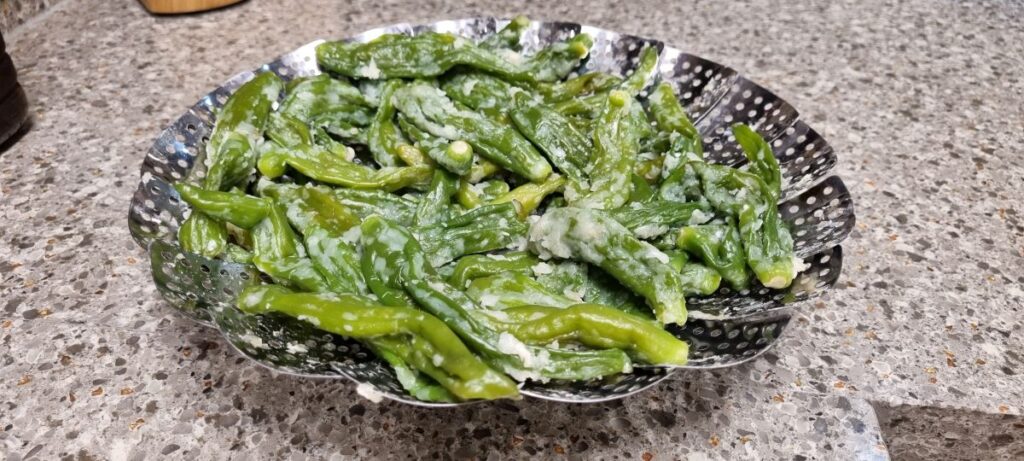
Now, let’s make the sauce.
5 tablespoons soy sauce
2 tablespoons Korean chili flakes (gochugaru)
1 tablespoon minced garlic
1 tablespoon sesame oil
2 tablespoons plum syrup (maesil-cheong)
2 tablespoons sugar
Combine everything in one bowl. As I mentioned earlier, plum syrup isn’t always easy to find outside Korea — if you’re out, just use 3 tablespoons of sugar instead of 2.
In Korea, plum syrup is traditionally made at home during plum season by layering fresh plums with sugar and letting the mixture ferment. It’s a pantry staple used in all kinds of dishes and side dishes, and once you make a batch, it keeps for about a year. It gives dishes a rounder, deeper sweetness than plain sugar or corn syrup, which is exactly why it’s used here.
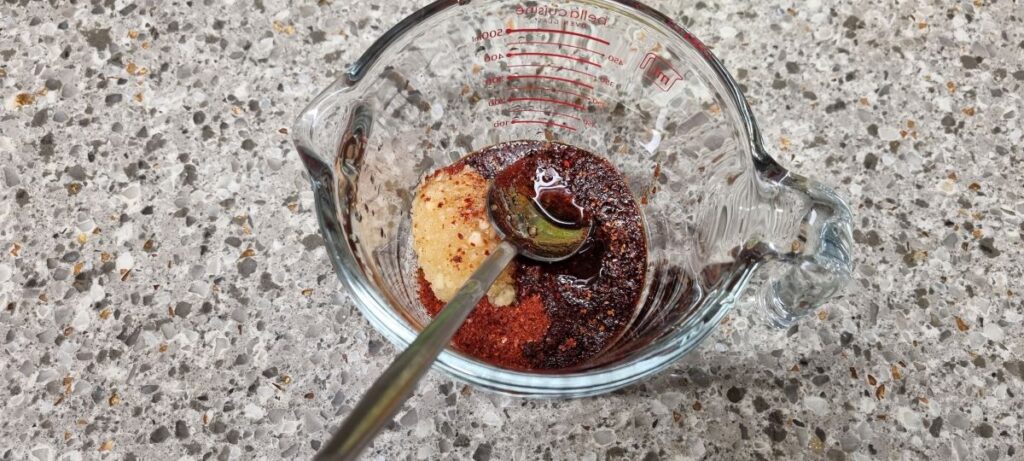
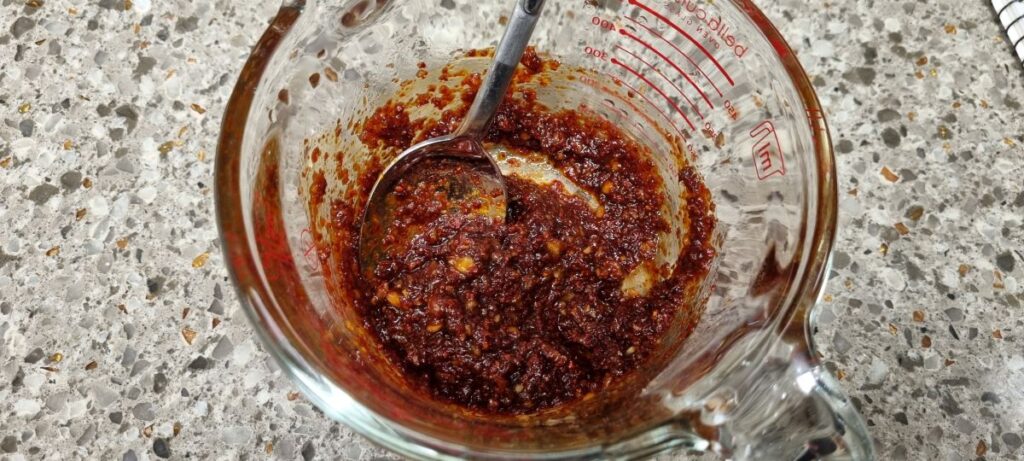
Stir the sauce together with a spoon. Think of this as your starting point — once you toss it with the peppers, taste it and see how it feels. Everyone’s palate is a little different, so don’t be afraid to tweak it from here.
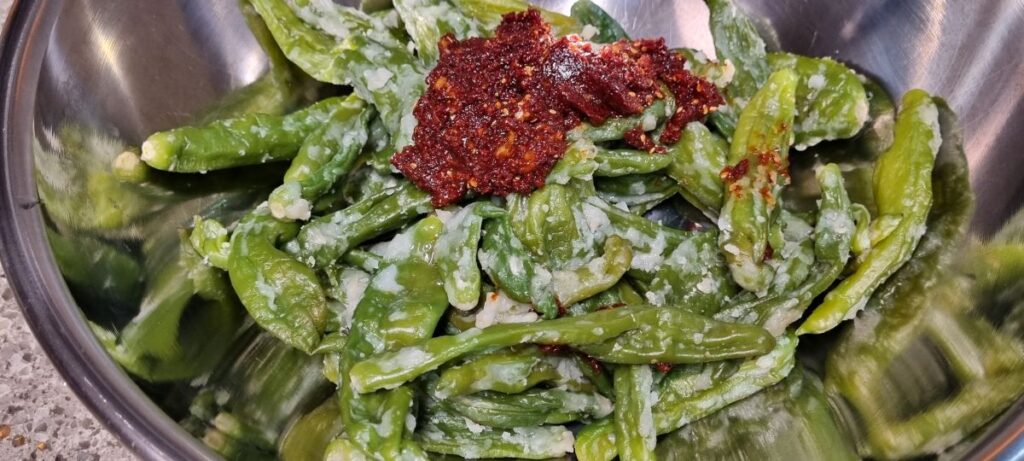
Pour all of the sauce over the cooled peppers and toss gently. A spatula or utensils tend to make it harder to coat everything evenly, so I’d recommend putting on some food-safe gloves and mixing it by hand instead.
Once everything’s tossed, give it a taste. Need a touch more sweetness? Add a little extra sugar. Tastes a bit flat? A splash more soy sauce will fix that.
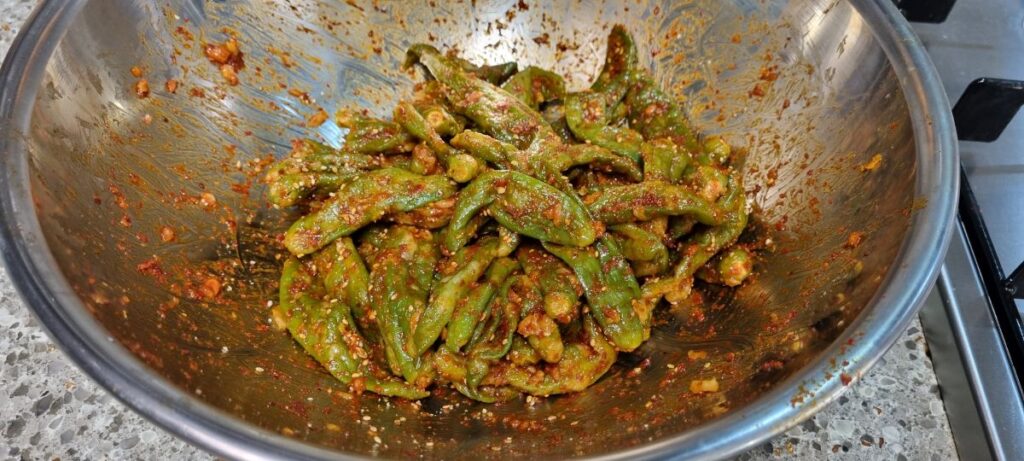
Keep working the sauce in gently by hand until every pepper is evenly coated. I sprinkled in 2 tablespoons of sesame seeds while mixing — feel free to leave these out if you don’t have any. Once it’s all mixed well, transfer everything to a storage container or serving plate.
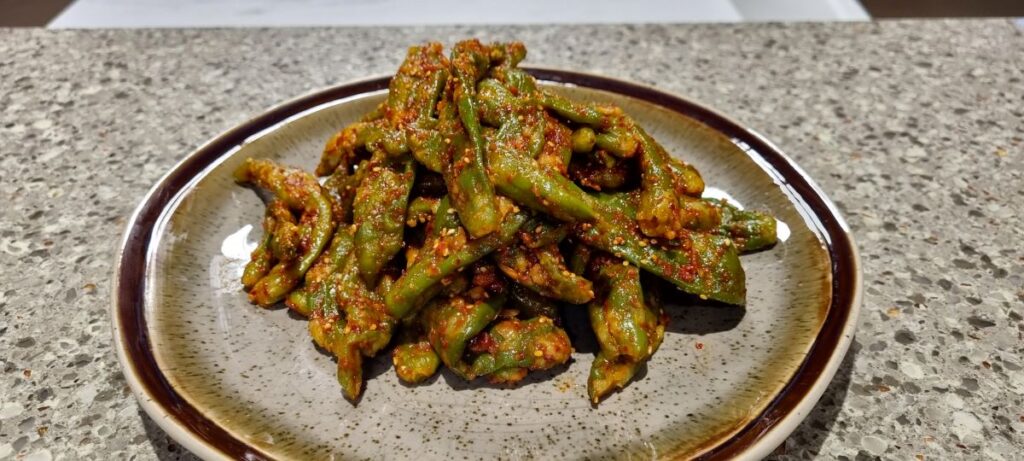
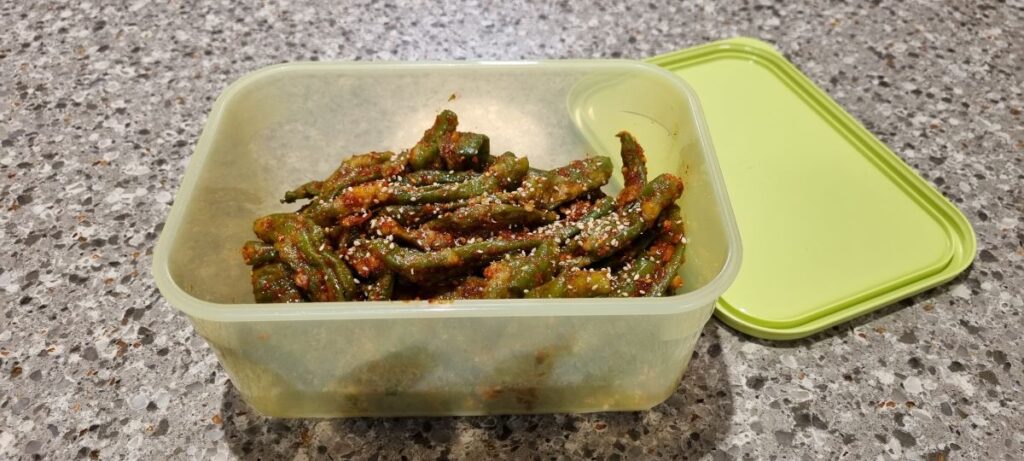
And that’s it — this side dish is done. I ended up with a pretty big batch, so I stored mine in a container. Keep it in the fridge and just grab a little at a time whenever you’re eating. It should keep well for about a week refrigerated.
I finished it off with a few extra sesame seeds on top to make it look a little more appetizing before storing. This one’s amazing served alongside grilled pork belly (samgyeopsal) — it’s the perfect pairing.
Hope you enjoy your meal today!