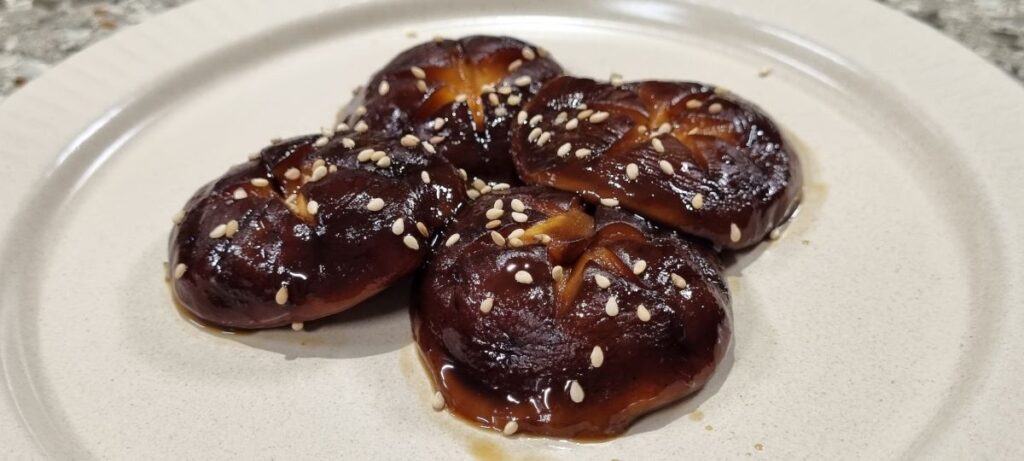
Shiitake mushrooms are one of the most commonly used ingredients in Korean cooking, and today I’m turning them into a soy-braised side dish (banchan). It’s made with just a handful of simple ingredients, but it comes out really flavorful.
Let me walk you through it step by step.
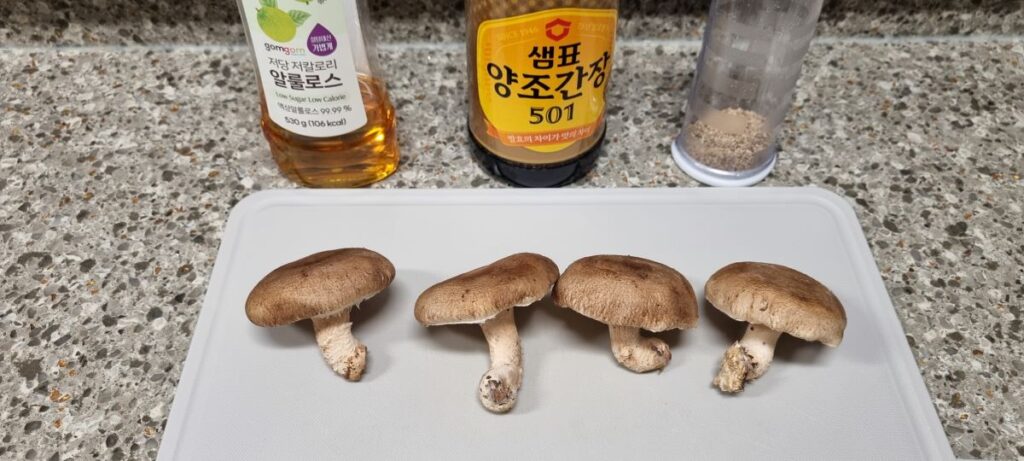
There are several cooking methods used for Korean banchan — things like mixing with seasoning (muchim), braising (jorim), stir-frying (bokkeum), and steaming (jjim). For this shiitake mushroom dish, I went with the braising method.
The good news is, you can use the exact same seasoning with any type of mushroom, or even mix a few different kinds together if you want.
Here’s what you’ll need
Ingredients
◾ 4 shiitake mushrooms
◾ 5 tablespoons soy sauce
◾ 2 tablespoons allulose (or sugar)
◾ 1 teaspoon sesame seeds
◾ 200ml water
Tools
◾ Cutting board
◾ Knife
◾ Pot
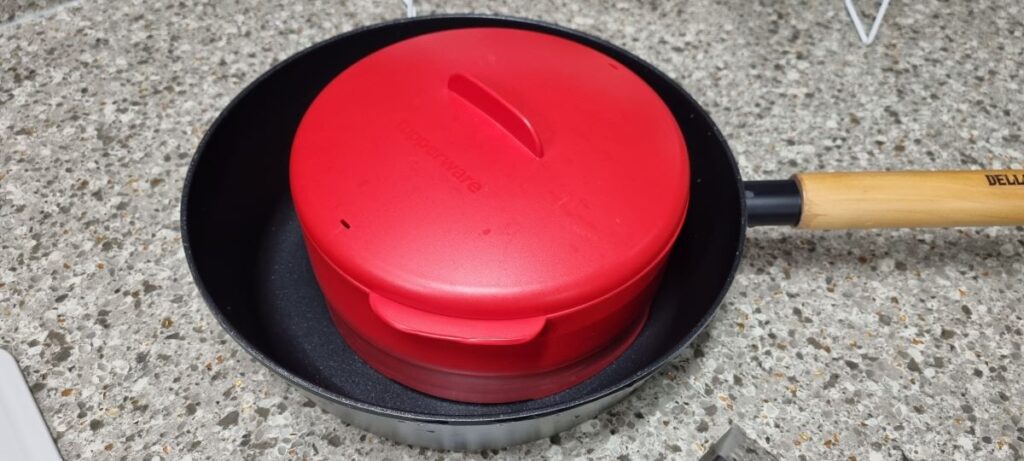
◾ Steamer
◾ Strainer/colander
◾ Bowl
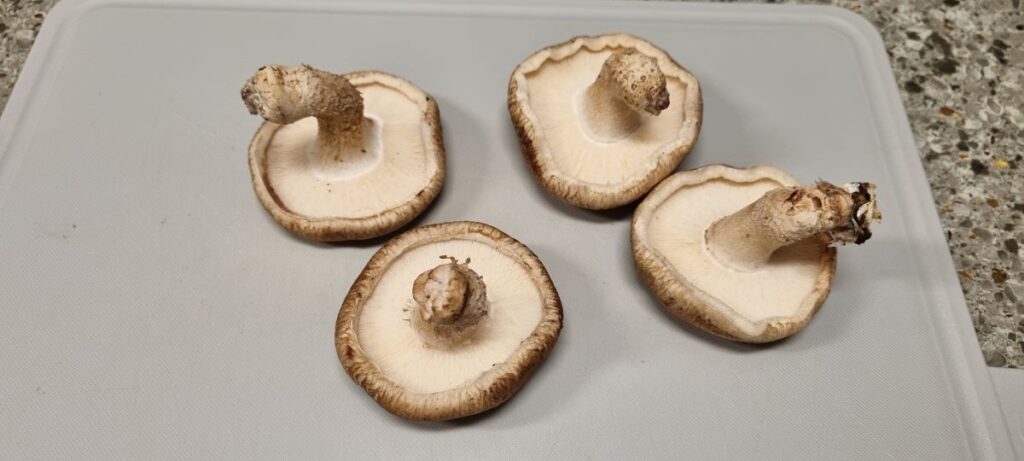
I used 4 shiitake mushrooms for this recipe, but feel free to use more if you’d like. In Korea, meals usually come with several small side dishes rather than just one big portion, so I kept the batch small on purpose.
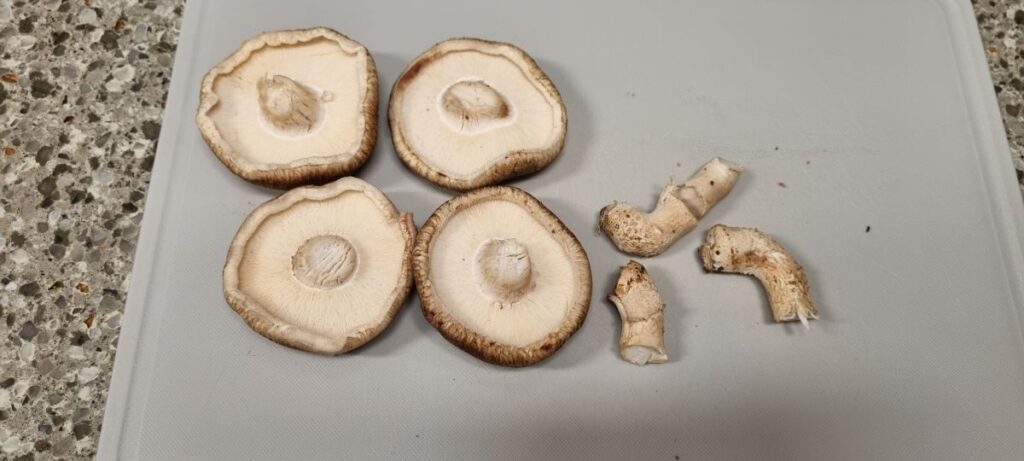
Before washing the mushrooms, give them a quick trim. Flip them over and cut off the tough stem end with a knife or scissors. That stem part is too chewy to eat, but don’t toss it — it’s great for adding extra depth of flavor later on.
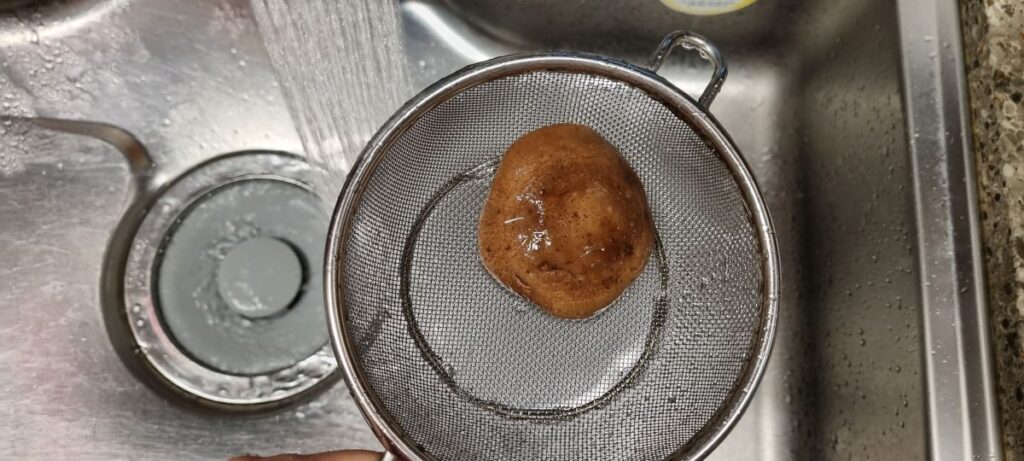
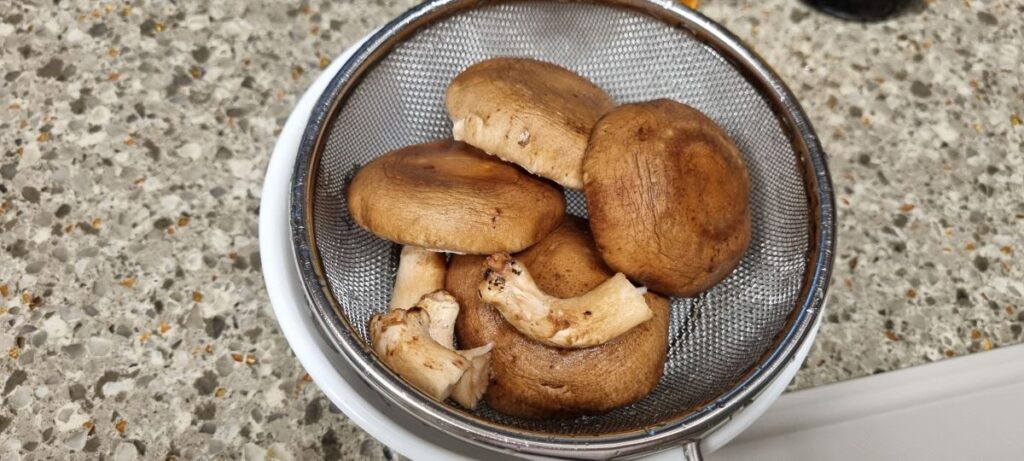
Mushrooms are grown in pretty clean conditions, so you don’t need to scrub them much. Actually, washing them too much can strip away their flavor and aroma, so just give them a light rinse under running water — think of it as brushing off any surface dust rather than a deep clean. Rinse the stems too, then let everything drain in a strainer for a bit.
Now for a little extra prep — totally optional, by the way. I just wanted the mushrooms to look nice, so I scored them. If you make a couple of shallow diagonal cuts on each side, it creates a thin decorative pattern. That’s what I did here.
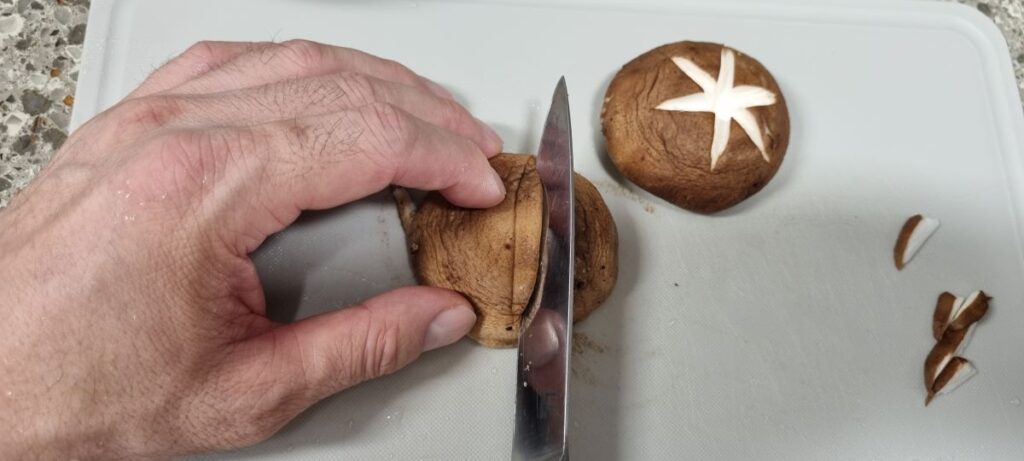
Once they’re scored, they look really pretty. Don’t throw away the trimmed bits either — I’m going to braise those along with the mushrooms. It’d be a shame to waste them.
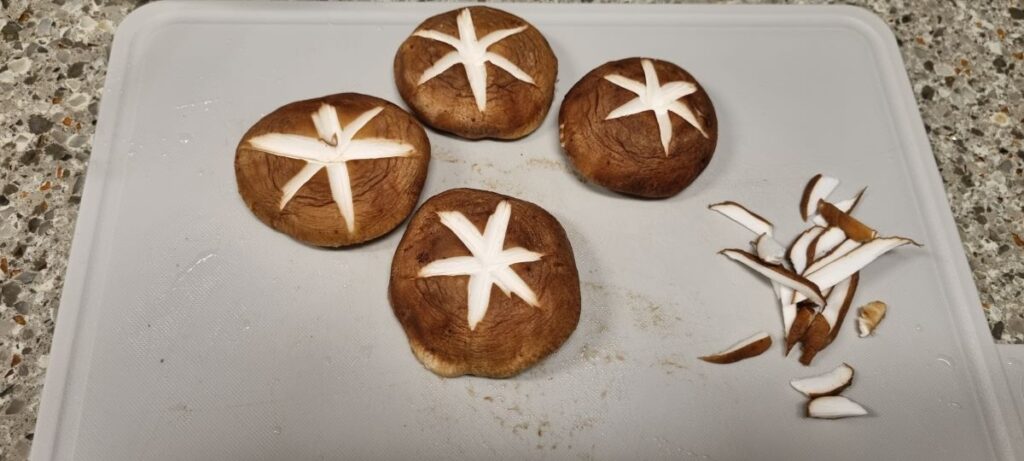
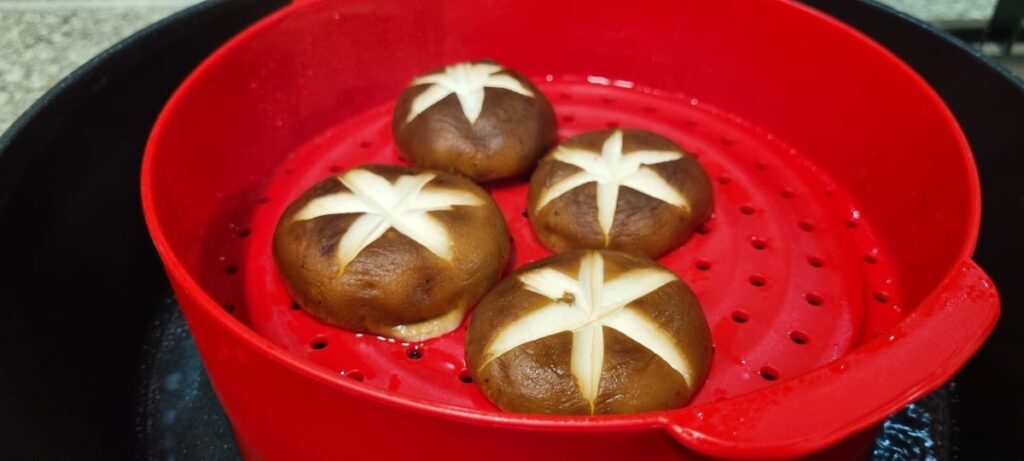
Place the 4 mushrooms in the steamer. It doesn’t matter which side faces up — just spread them out evenly.

Fill a pot (one that fits your steamer) with enough water and bring it to a boil ahead of time. Once the water is boiling, you’ll set the steamer on top.
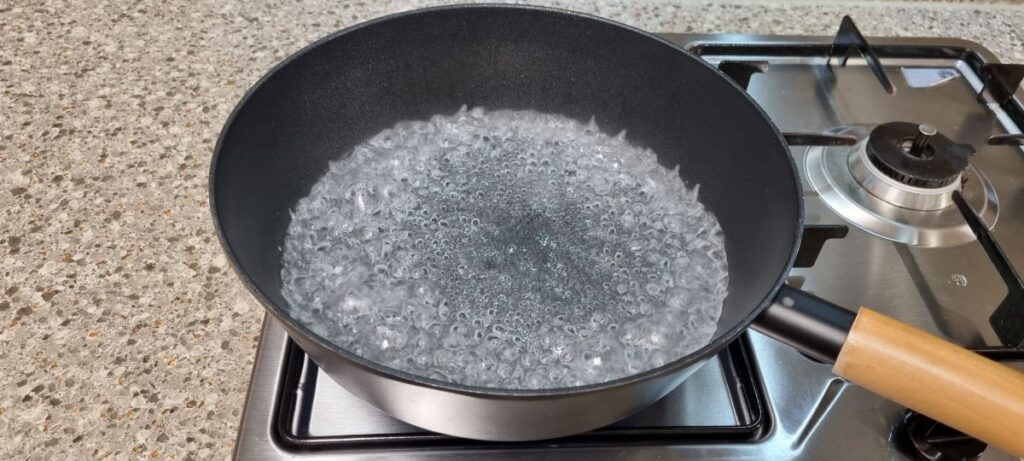
Once the water is boiling, place the steamer over the pot and steam for just 30 seconds to 1 minute. Since there’s a second braising step coming up, you don’t want to steam them too long.
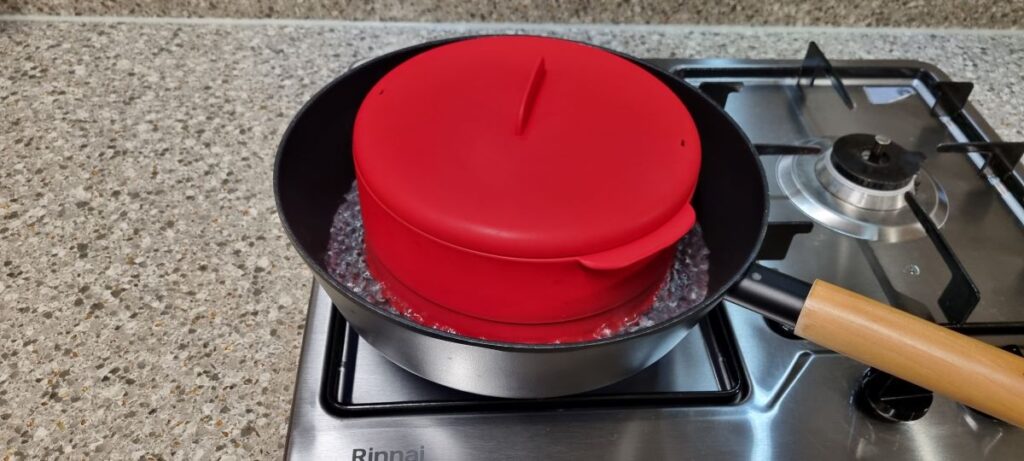
Turn off the heat and set the lid aside. Take the steamer off to the side — you’ll be using this same pot to braise the mushrooms next. You could technically skip discarding the water and just add the seasoning straight into it for convenience, but I poured it out so I could give you an exact water measurement for the recipe.
After pouring out the water, add 200ml of fresh water to the pot. This amount is enough to braise anywhere from 4 up to about 8 mushrooms.
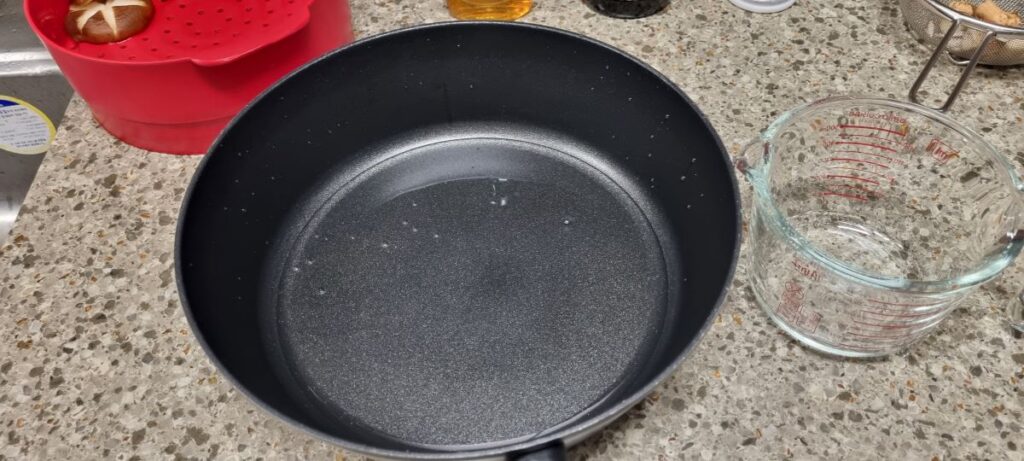
With the water in the pot, add 5 tablespoons of soy sauce and 2 tablespoons of allulose (or sugar) — using a regular adult-sized spoon. Pretty simple, right?
This is the base you’ll braise everything in. If you like it a little sweeter, just bump up the allulose or sugar to 3 tablespoons instead of 2. Give it a stir and taste it — if it seems too salty, just add a splash more water.

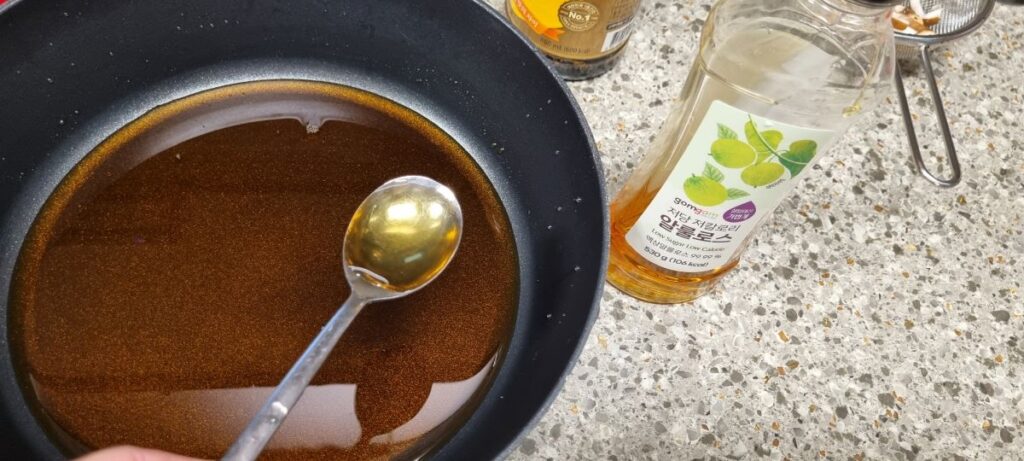
Add the water, soy sauce, and allulose to the pot, and give it a gentle stir with a spoon. You’ll keep stirring throughout the braising process.
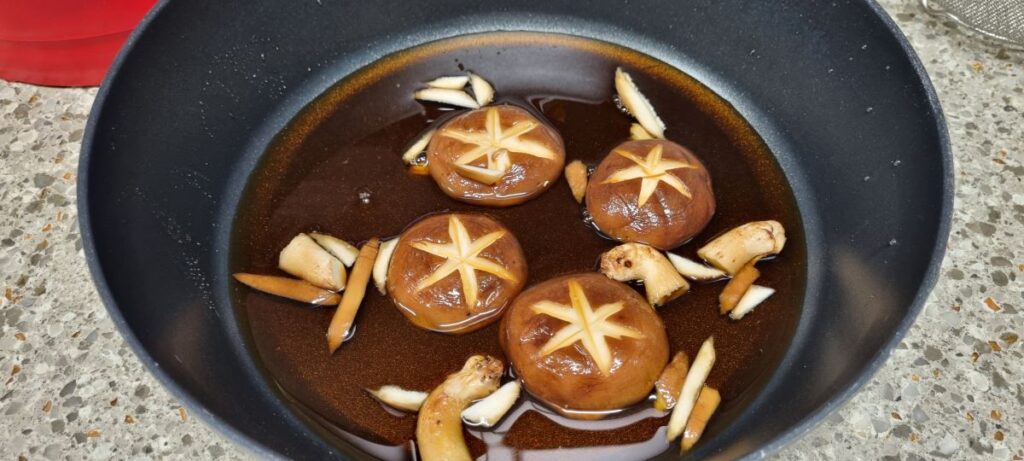
Now add the shiitake mushrooms along with all those stem trimmings you saved earlier. The stems really help boost the umami flavor, so don’t skip them.

Turn on the stove and set it to medium heat — you’ll keep braising at this temperature.
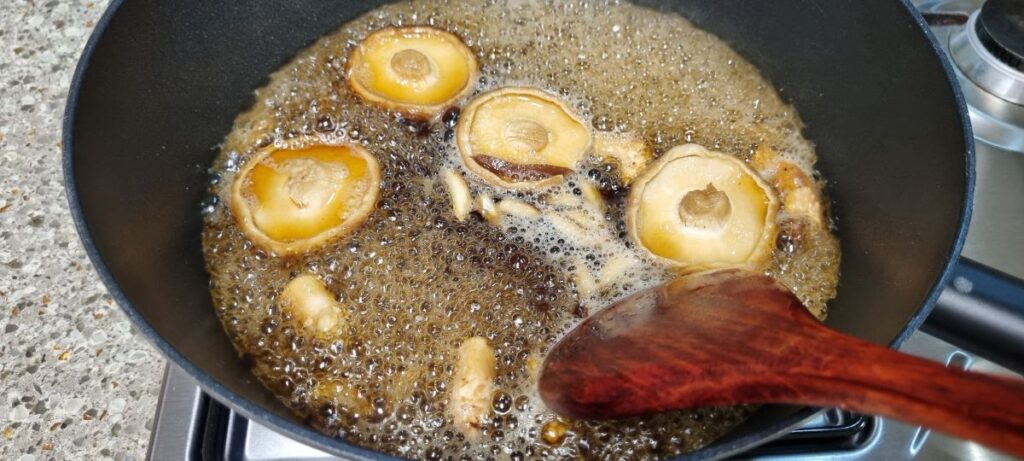
As the mushrooms braise, the water and seasoning will reduce and thicken, which is what deepens the flavor and lets it soak into the mushrooms. That’s exactly why you don’t want the seasoning to taste too salty or too sweet before braising — it intensifies as it cooks down, so keep the initial seasoning on the lighter side.
Keep stirring over medium heat, and flip the mushrooms as you go so the sauce coats them evenly on both sides.
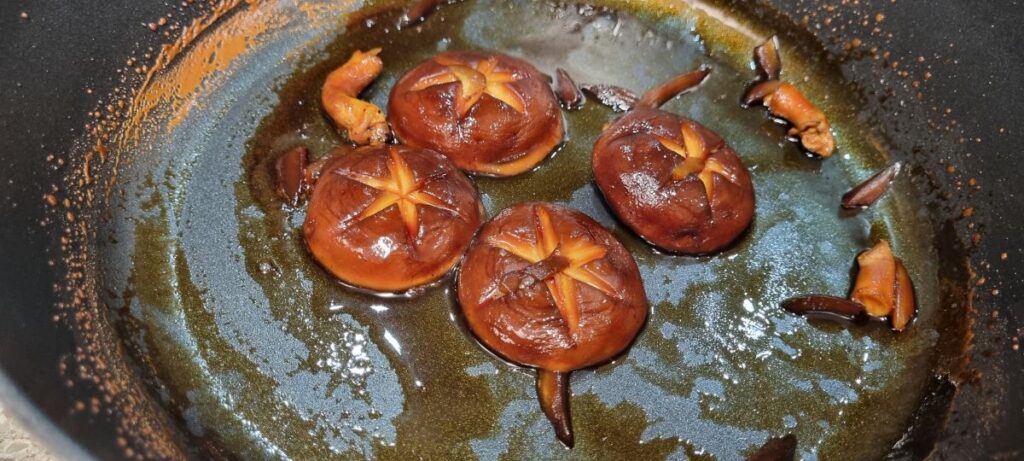
The key here is to keep stirring constantly — otherwise the soy sauce and sugar can scorch and burn. After braising for about 5 to 10 minutes, everything should reduce down like in the photo above.
It’s totally fine to leave a bit more sauce in the pan if you prefer — pouring the extra sauce over the mushrooms when serving makes them even tastier. I let mine reduce almost all the way down this time, but next time I might leave a little more sauce.
At this point, the braise is done. You can toss out the stem pieces now since they’ve done their job — just plate up the mushrooms. Finish it off with a sprinkle of 1 teaspoon of sesame seeds for extra flavor and a nice finished look, and your soy braised shiitake mushrooms are ready.
You can eat them whole, or snip them into smaller pieces with kitchen scissors for easier bites. Enjoy your meal!