
I made a batch of zucchini stir-fried with salted shrimp the other day.I’d made doenjang jjigae (soybean paste stew) the night before and had some leftover zucchini, so I figured I’d put it to good use.
Before we get into the recipe, let me tell you a bit about salted shrimp (saeujeot), since it’s a staple in Korean cooking.
It’s made by curing tiny shrimp in salt, and because it keeps for a long time, Korean households use it all the time — for seasoning kimchi, balancing out soups and stews, and finishing off all kinds of side dishes.
It’s also a classic dipping sauce for boiled pork (suyuk).
Since salted shrimp is naturally salty and packed with umami, stir-frying it together with zucchini turns into a seriously tasty side dish.
Let me walk you through how it’s made.
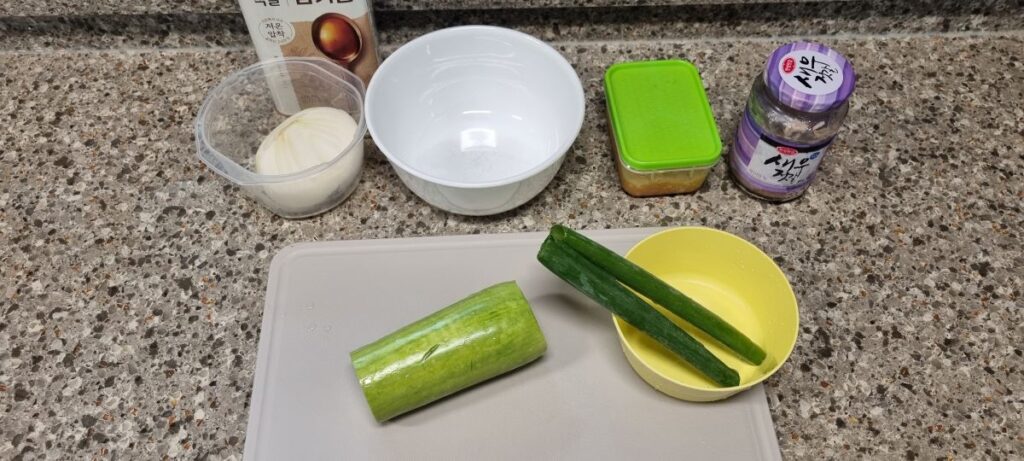
I only used about two-thirds of my zucchini here, but feel free to just use one whole zucchini.
Ingredients
1 zucchini
1 stalk green onion
1/2 onion
1/2 tablespoon salted shrimp (saeujeot)
1 tablespoon minced garlic
1/2 teaspoon salt
2 tablespoons cooking oil
2 tablespoons sesame oil
Tools
Frying pan
Cutting board
Knife
Cooking spatula
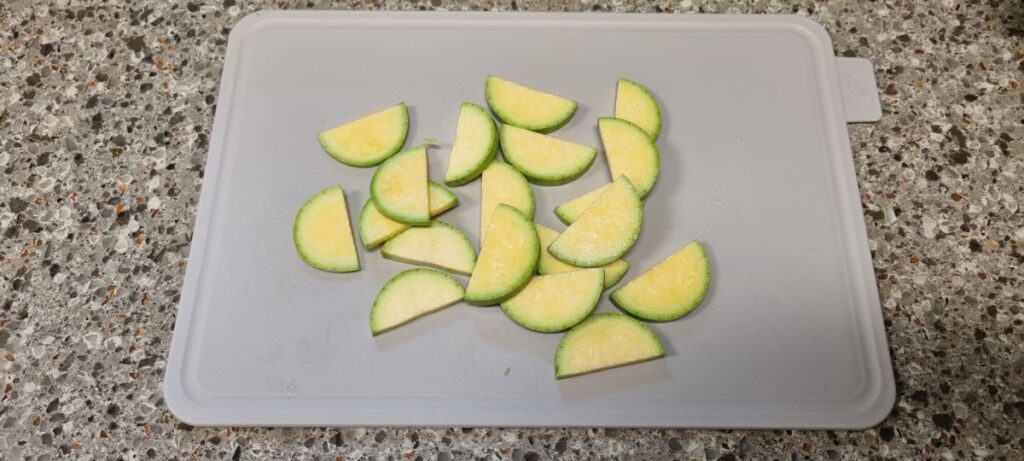
Cut the zucchini in half lengthwise, then slice it into rounds about 0.5mm thick.
Too thick or too thin and the texture won’t be quite right, so aim for that 0.5mm mark.
Slice the onion about the same thickness as the zucchini.
I used half an onion here, but you can use a bit less if you’d like.

The green onion is optional, but it really adds a lot of flavor, so I’d recommend using it if you can.
One large stalk is about right.
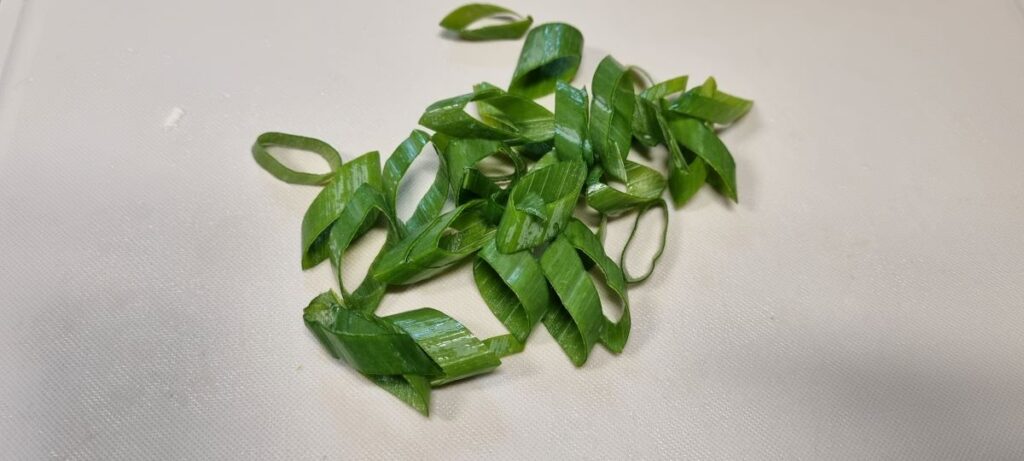
Once everything’s prepped, you’re basically ready to cook.
With Korean side dishes, prepping the ingredients is usually the part that takes the most time — the actual cooking tends to go by pretty fast.
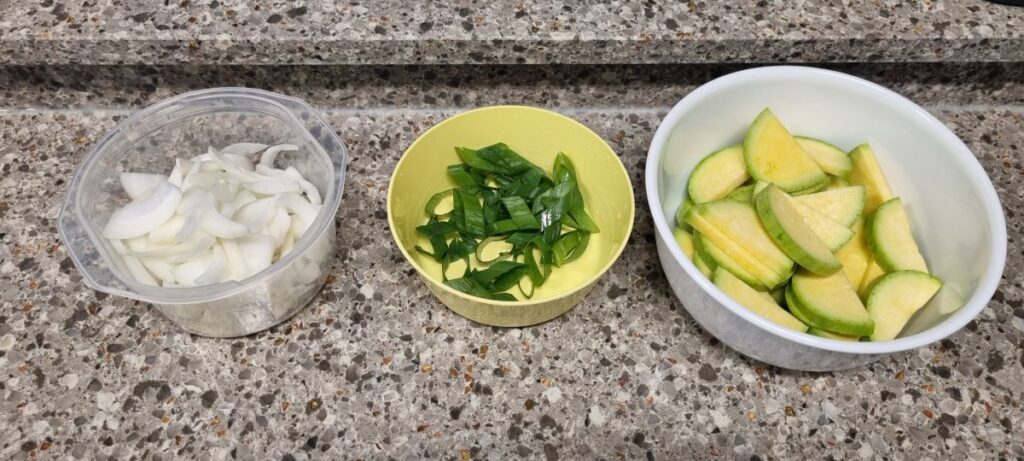
There’s one thing worth keeping in mind with this dish: instead of tossing everything into the pan at once, you’ll be adding the ingredients in stages.
So you’ll want to stay on top of the heat and keep moving.
It’s not complicated at all though — I’ll walk you through exactly when to add what.
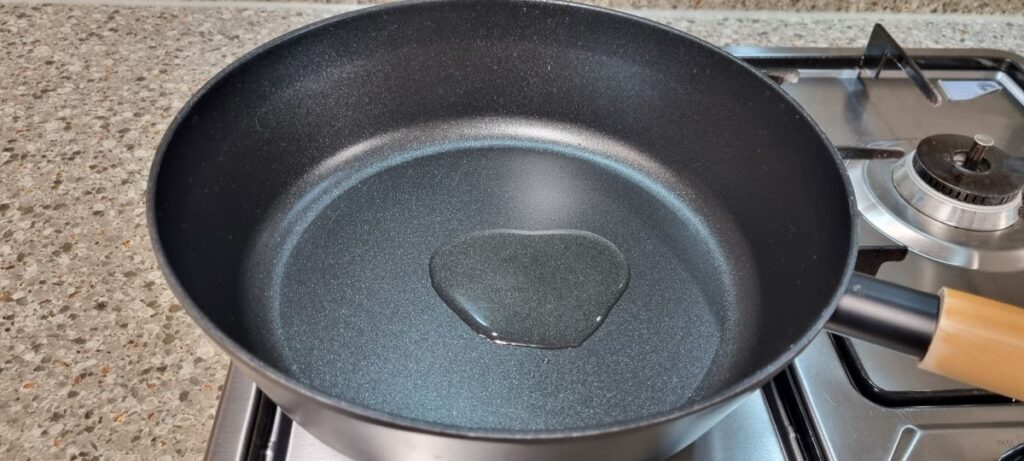
Add 2 tablespoons of cooking oil to the pan and turn the stove on to medium-low.
You’ll keep it at this heat the whole way through.
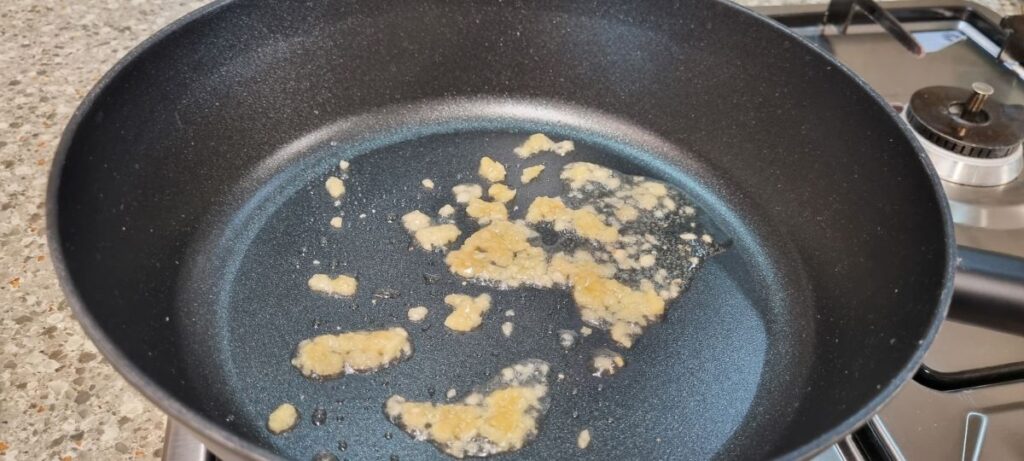
Once the oil’s in, add the minced garlic right away.
Keep the heat medium-low so the garlic doesn’t burn, and stir it around with your spatula.
This is the step where the garlic loses its sharp raw bite.
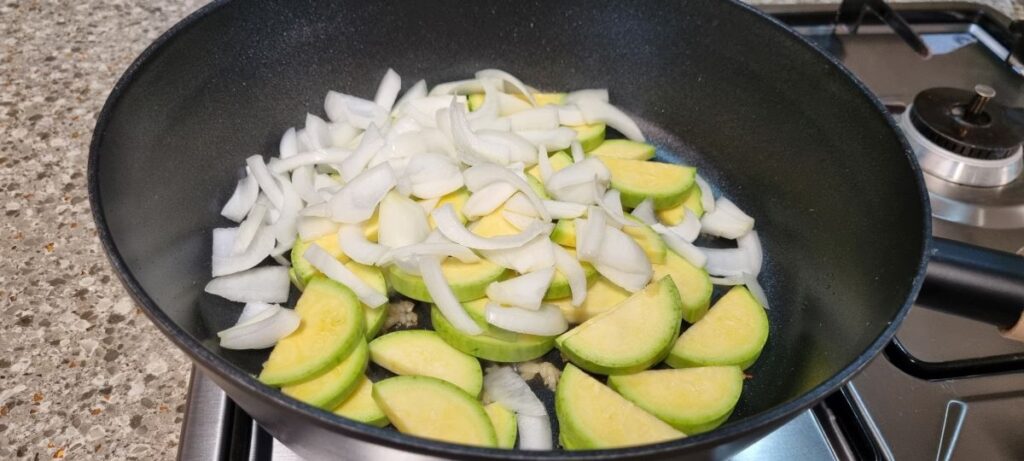
Sauté the garlic for about 20 seconds, then add the zucchini and onion together.
Keep stirring the whole time — this step requires quick, attentive stirring.
Mix everything together well, then sprinkle in about half a teaspoon of salt.
This just gives the vegetables a light base seasoning — go easy on it, since the salted shrimp is what’s going to do most of the seasoning work.
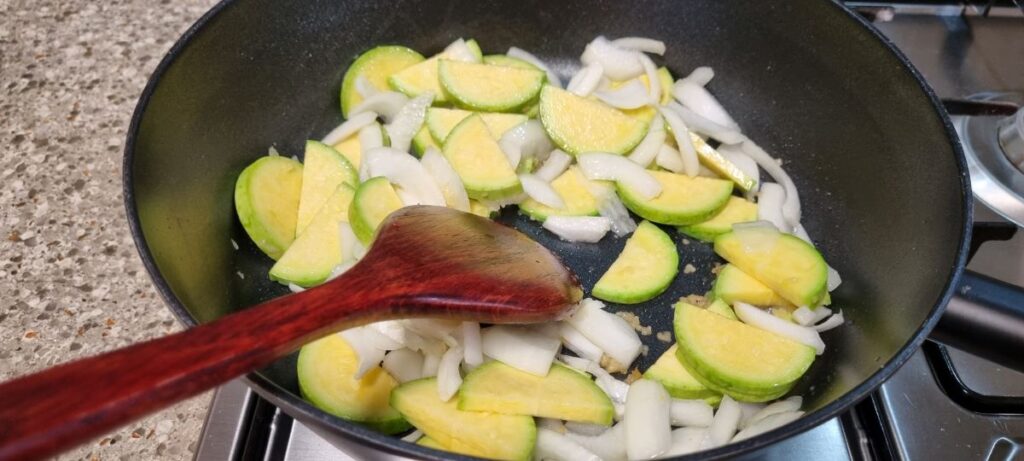
Now add the salted shrimp — about half a tablespoon using a regular spoon, or roughly a tablespoon and a half if you’re measuring with a teaspoon.
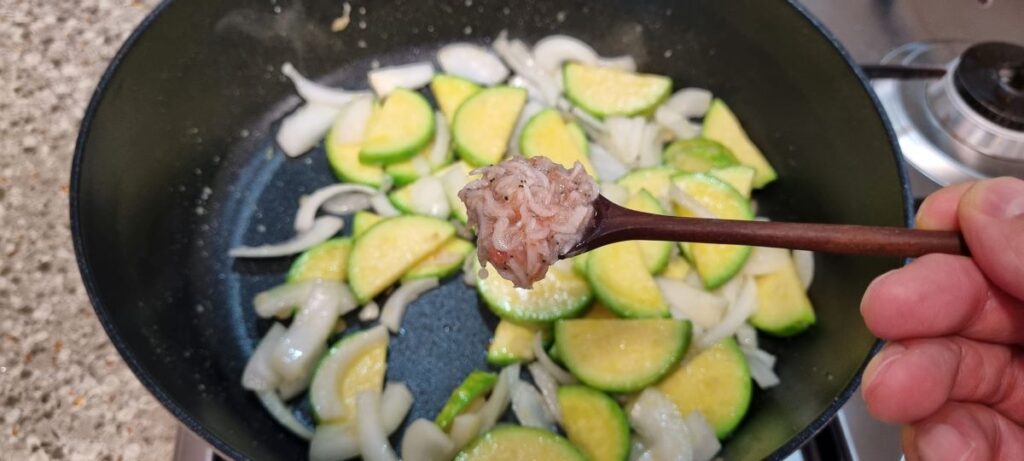
Keep stirring after adding the salted shrimp.
Once the zucchini looks about 50 to 70% cooked, add 2 tablespoons of sesame oil (or perilla oil).
Sesame oil can scorch easily over high heat, so it’s best to add it toward the end.
Sesame oil comes from pressing sesame seeds, while perilla oil comes from perilla seeds — both give that toasty flavor Korean cooking is known for.
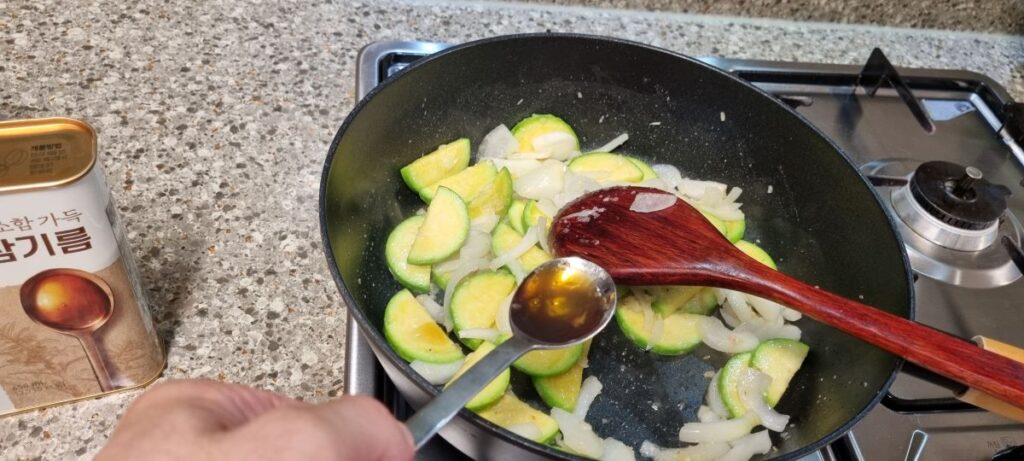
Keep stirring — it’s really just a rhythm of adding something, stirring it in, adding the next thing, stirring it in.
Once you’re at this point, go ahead and add the green onion.
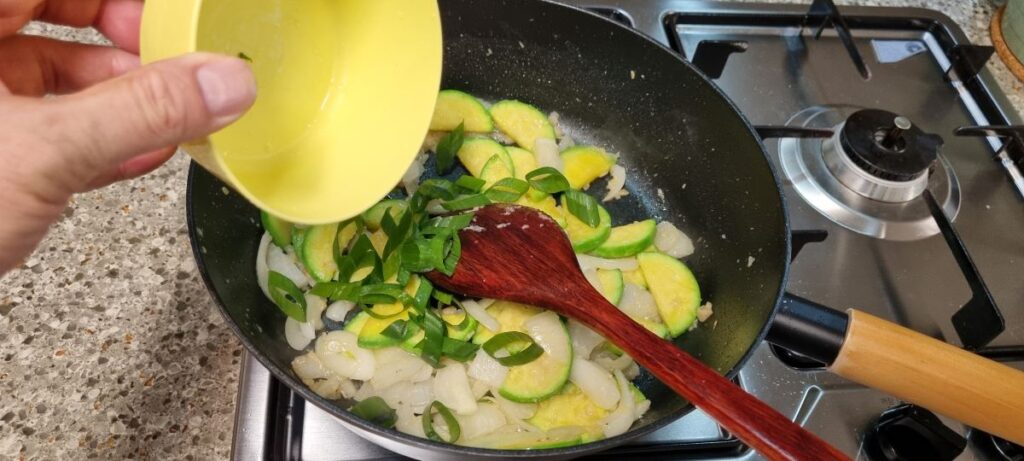
Stir for about another minute after adding the green onion, then taste-test a piece of zucchini.
If it’s cooked through and soft, you’re done.
If it still feels a bit crunchy, give it a little more time on the heat before turning it off.
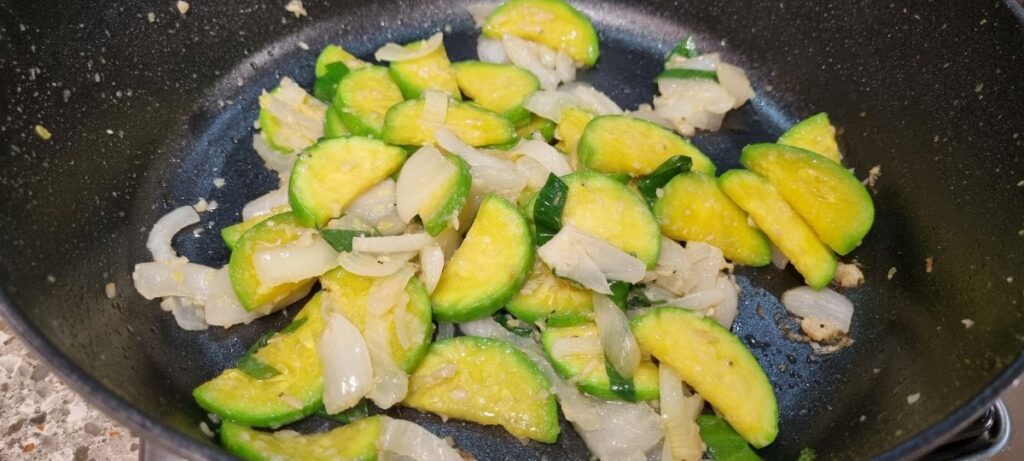
And there you have it — a sweet, savory zucchini side dish.
It’ll keep in the fridge for about 2 to 3 days.
In my house, we sometimes toss the leftover zucchini stir-fry into bibimbap along with whatever other side dishes we have on hand.
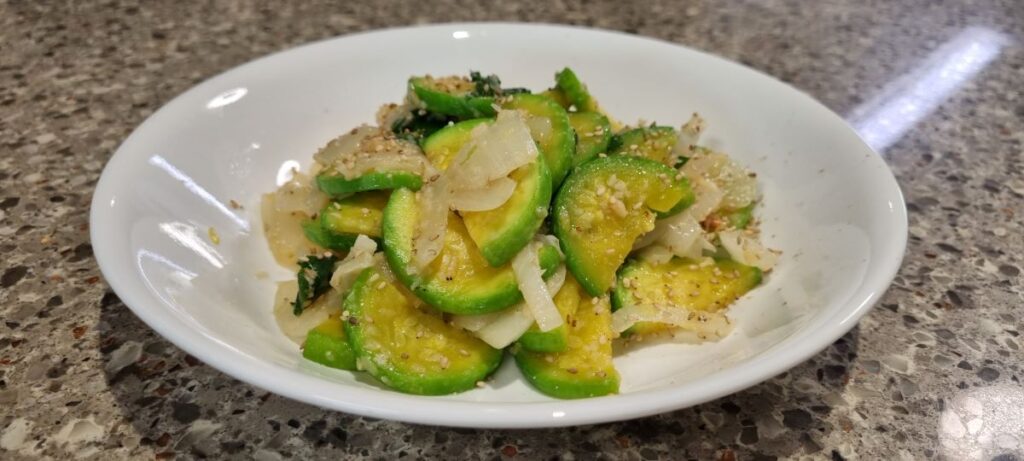
Hope you enjoy your meal today!