
Almost every Korean fridge has eggs in it at all times. A single egg can turn into all kinds of side dishes, and it’s packed with nutrition too.
Today I’ll show you how to make a soy marinated egg side dish, where boiled eggs sit and soak in a savory soy sauce marinade.
Unlike a jorim (Korean braised dish), where you actually simmer soy sauce on the stove, this one skips that step entirely.
You only turn on the heat to boil the eggs. Everything else comes together with no cooking at all, which makes this a lot easier than it sounds.
The basic idea is simple: make the soy marinade first, then drop the boiled eggs right into it.
Let me walk you through exactly how it’s done. It’s really this easy.
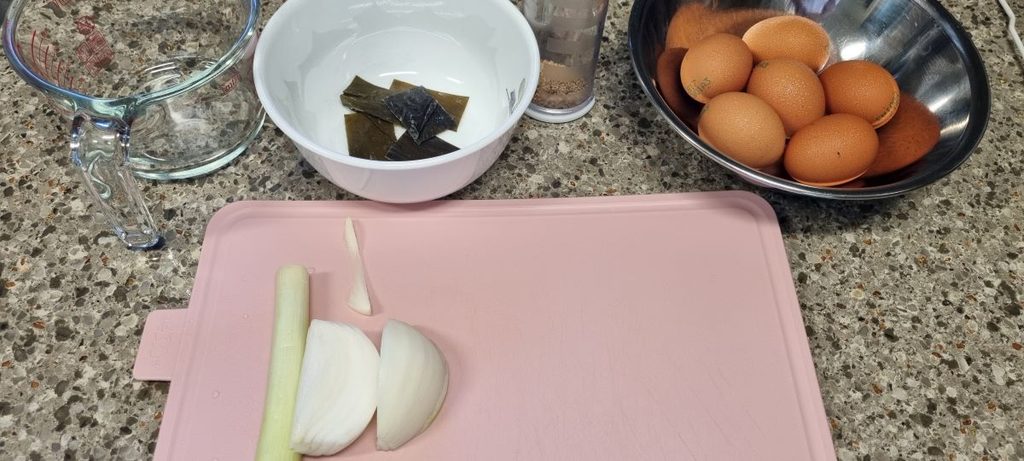
Here’s what you’ll need.
Ingredients
◾ 6 eggs
◾ 1/4 onion
◾ White part of a scallion, about 6 inches
◾ 1 tablespoon toasted sesame seeds
◾ 2 tablespoons allulose (or sugar)
◾ 100 ml soy sauce
◾ 5 pieces of dried kelp (dashima)
All seasoning amounts are based on a regular Korean tablespoon, not a measuring spoon.
Tools
◾ Cutting board
◾ Knife
◾ An airtight container for storing the eggs
◾ A pot for boiling the eggs
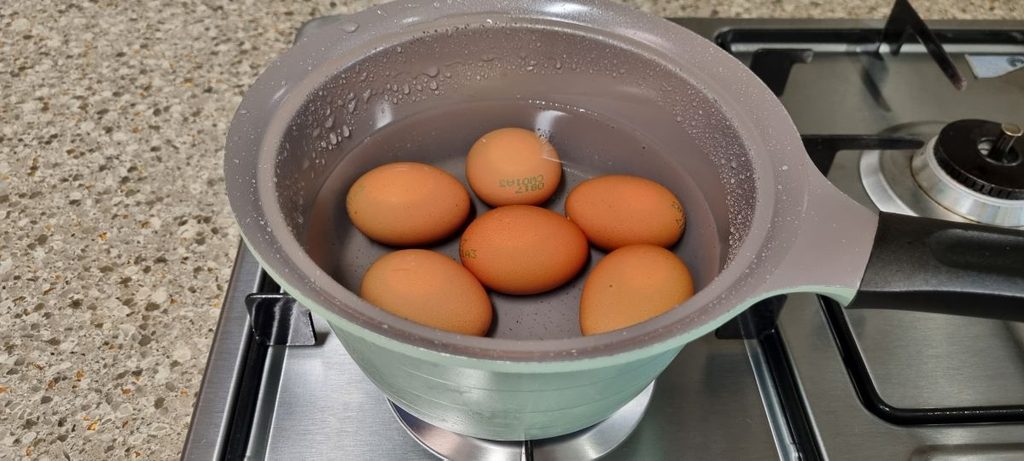
Take the eggs out of the fridge ahead of time and let them come to room temperature.
Leaving them out for about 30 minutes keeps them from cracking once they hit the boiling water.
Once they’ve warmed up, add the eggs to a pot and start boiling them with the lid off.
Once the water comes to a boil, lower the heat to medium and boil for 5 minutes.
After that, turn off the heat, put the lid on, and just leave the pot sitting on the stove. The residual heat will finish cooking the eggs gently on its own.
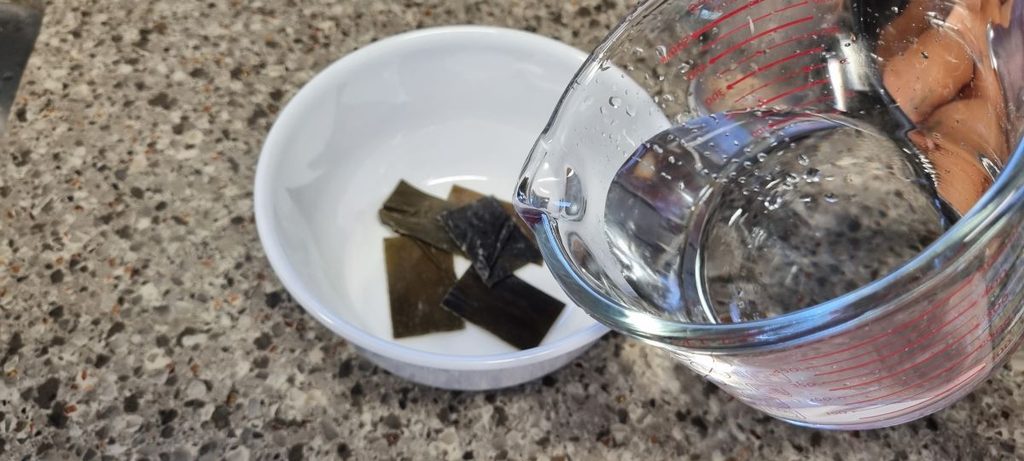
While the eggs are boiling, get your kelp broth going.
Kelp adds a nice savory depth, and that broth becomes part of the soy marinade later.
Put 5 pieces of dried kelp (or kelp cut into similar-sized pieces) into a bowl and pour in 150 ml of cold water.
That’s really all it takes to pull out the umami from the kelp. No need to boil it.
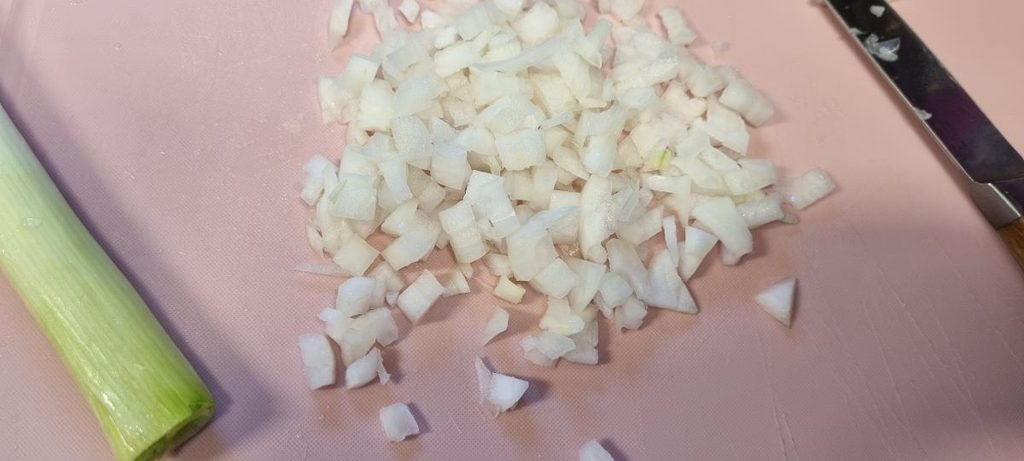
While the eggs are boiling and the kelp broth is steeping, it’s time to put together the soy marinade.
Cut 1/4 of an onion into roughly 1cm cubes.
Cut the scallion into similar-sized pieces too. Stick to the white part of the scallion, since it has the best flavor here.
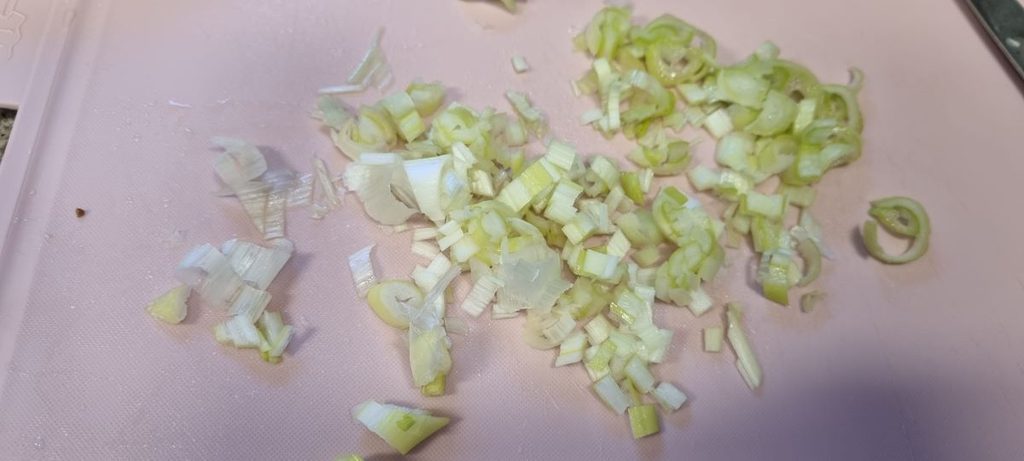
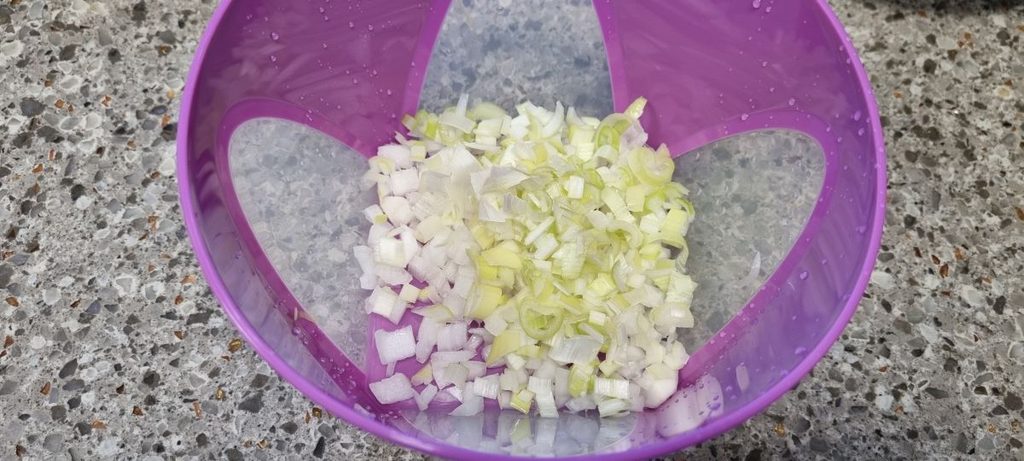
Since these eggs aren’t something you eat right away, and need to sit in the fridge for a while, go ahead and build the marinade directly in the container you’ll be storing them in.
Add the chopped onion and scallion to your storage container.
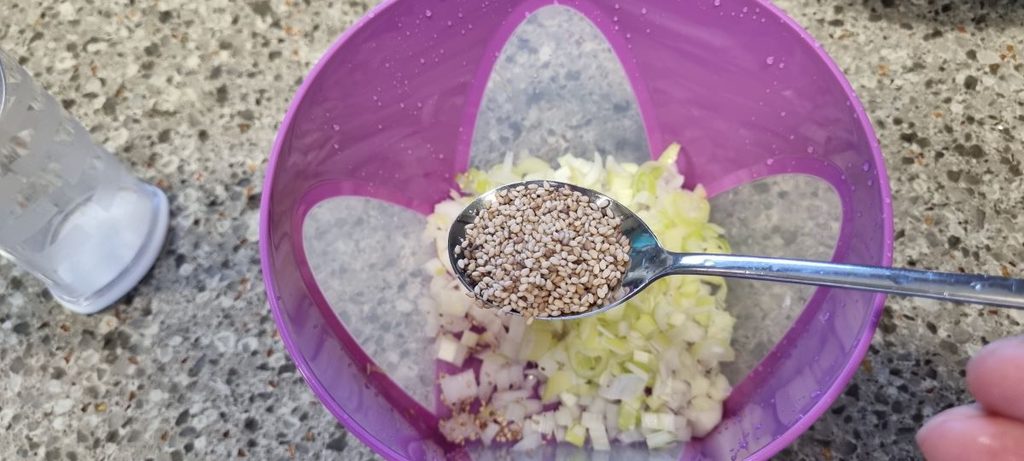
Add in the tablespoon of sesame seeds too. If you don’t have any on hand, feel free to skip it.
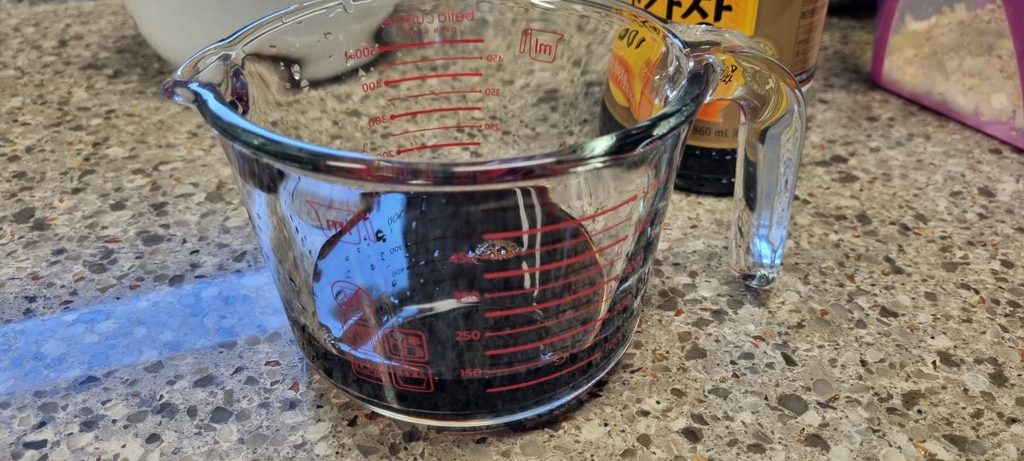
Now for the marinade itself.
Pour in 100 ml of soy sauce, along with 2 tablespoons of allulose or sugar (corn syrup works fine here too).
The key to this dish comes down to getting the ratio of soy sauce to sweetener right, since that balance really shapes the final flavor.
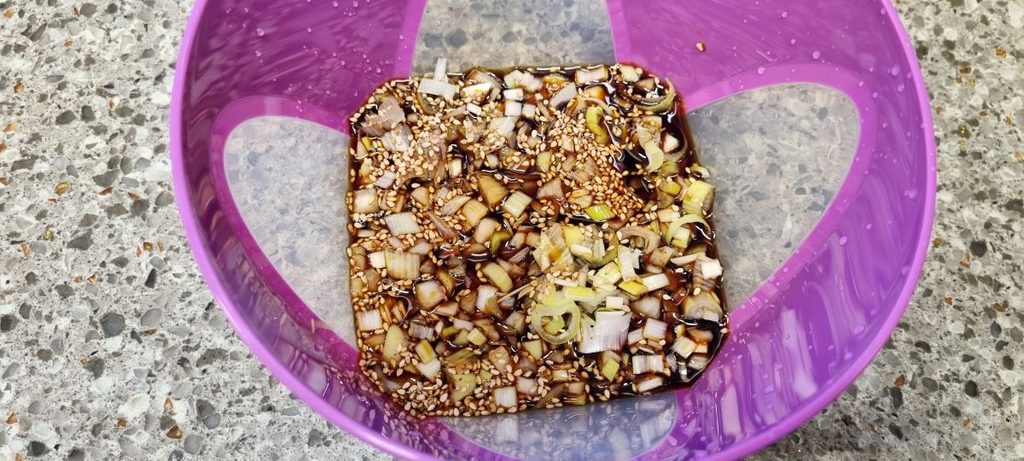
Pour the soy marinade over the onion, scallion, and sesame seeds already in the container.
You could technically get away with just soy sauce and sweetener alone, but the onion and scallion add a fresh, clean note that makes a real difference.
They’re especially good when you mash up an egg with rice and mix in some of that onion and scallion. That’s exactly why I like keeping them in.
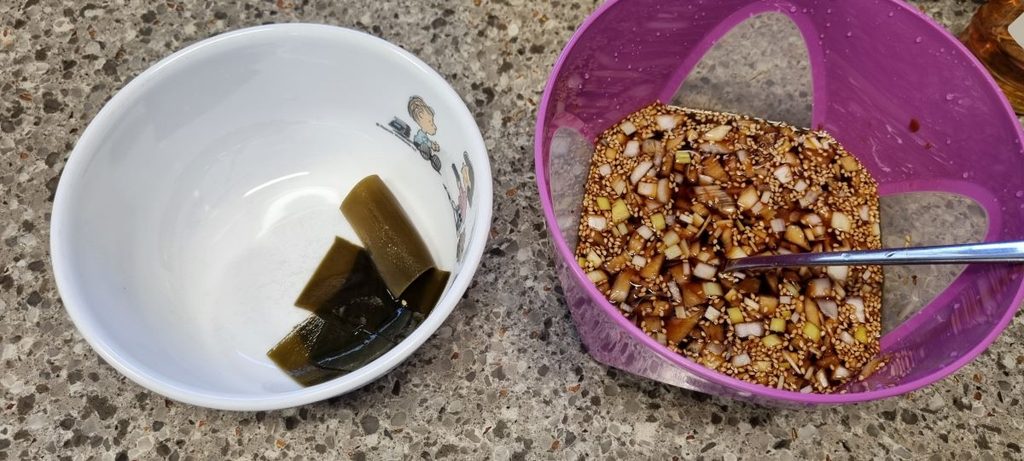
By the time the eggs finish boiling and resting, your kelp should have been steeping in the water for a while.
Pour that kelp broth into the container with your soy marinade and give everything a good stir with a spoon.
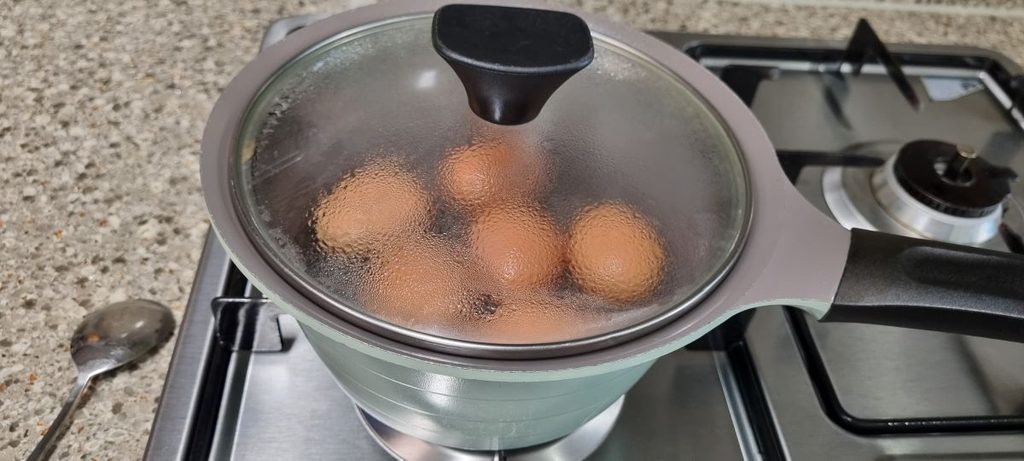
Once the pot has been off the heat with the lid on for about 5 minutes, the eggs should be fully cooked through.
Transfer the cooked eggs into a bowl of cold water. This makes the shells much easier to peel.
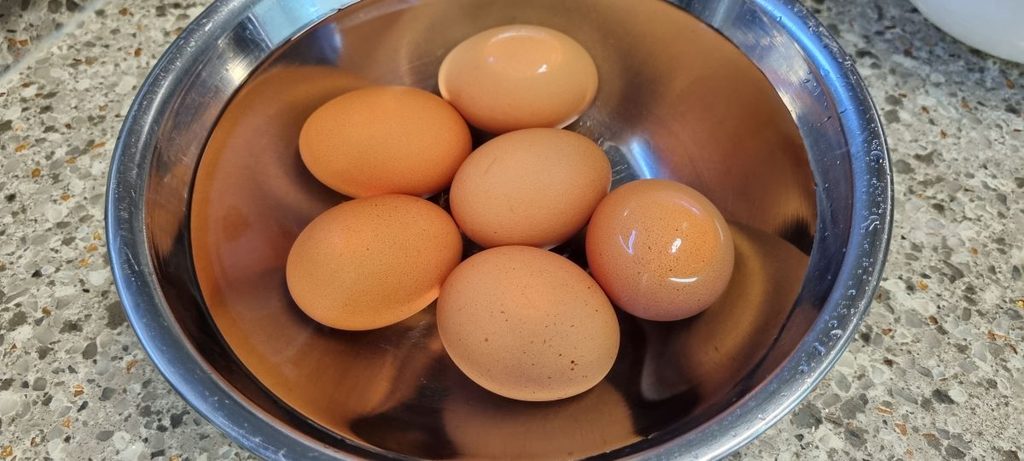
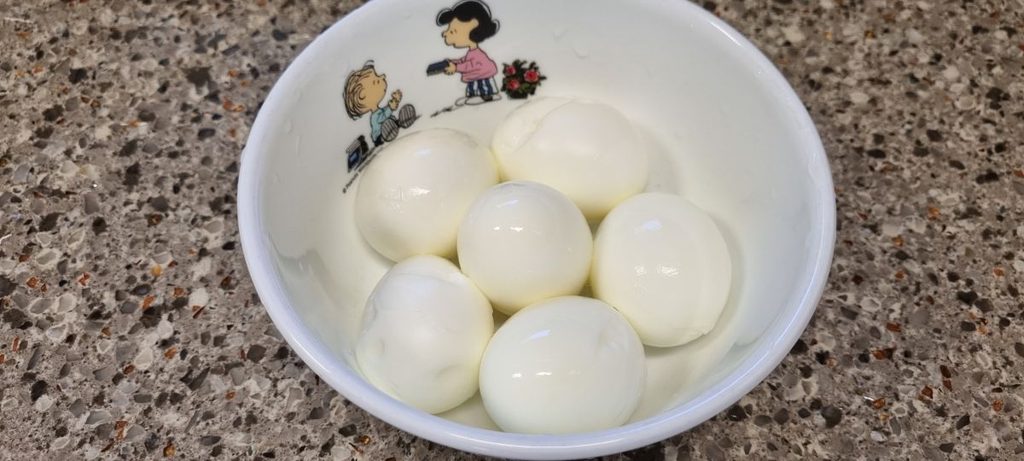
Peel the eggs carefully.
Once peeled, drop them straight into the container with the soy marinade you made earlier.
And that’s it. Your soy marinated eggs are ready.
That said, don’t eat them right away. Let them sit in the fridge for at least 5 hours first, which gives the eggs time to properly soak up all that soy marinade flavor.
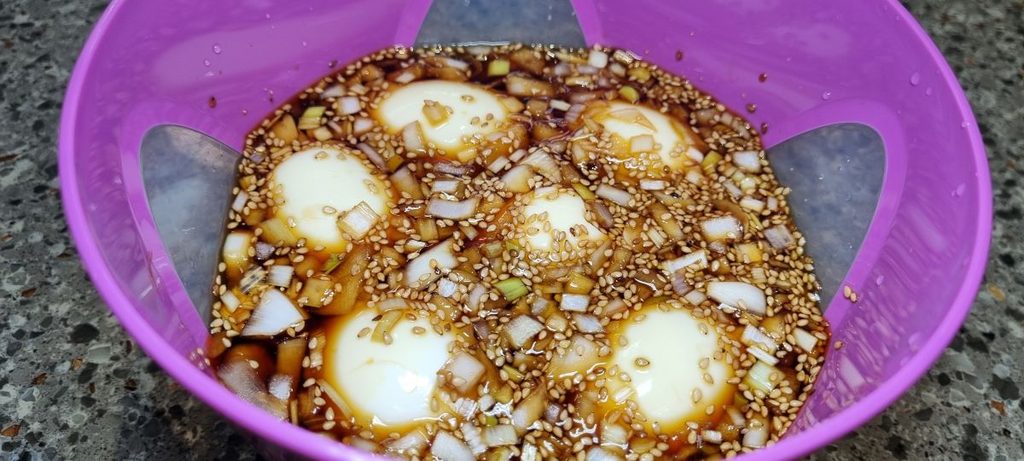
A lot of Korean side dishes are meant to be stored in the fridge for several days, which is why many of them are preserved in soy sauce, salt, or gochujang to help keep the ingredients fresh longer.
This is a big part of traditional Korean side dish culture. Back before refrigerators were common, preserving food this way meant it could last a long time without needing to be kept cold.
Here’s my favorite way to eat these eggs.
Add one to a bowl of rice, along with about 3 tablespoons of the soy marinade, onion, and scallion sitting in the container.
The real secret here is adding 2 tablespoons of sesame oil on top. Mash the egg into the rice and mix everything together. It’s seriously good.
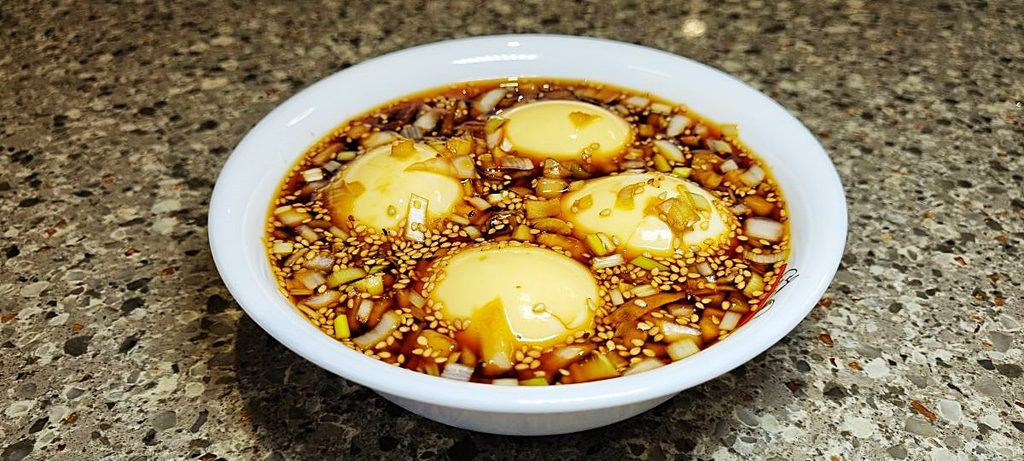
Kept in an airtight container in the fridge, these eggs are best eaten within about 5 days. Since they’re peeled and sitting in liquid, it’s worth checking that they still look and smell fine before eating, just to be safe.
Because they keep well for a good stretch, it’s worth making a bigger batch at once. They come in handy anytime you don’t have another side dish ready to go, so give this one a try.
Hope you have a happy, delicious meal 🙂