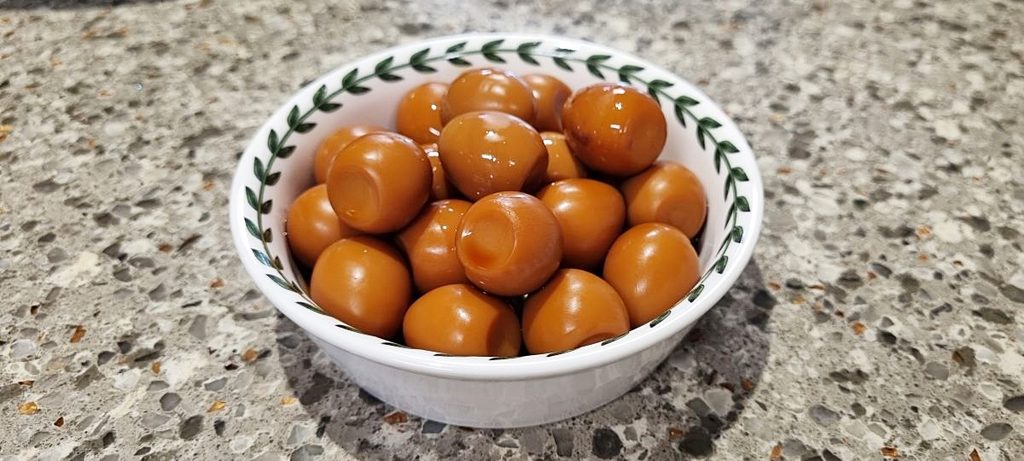
Today I’ll show you how to make jangjorim with quail eggs. Jangjorim is basically a method where you simmer down soy sauce until it turns into a rich, salty-sweet glaze that soaks right into whatever you’re cooking.
You can make jangjorim with regular eggs too, but quail eggs are the go-to choice here since the soy glaze really soaks into them well. If you can’t find quail eggs, regular hard-boiled eggs work fine as a substitute.
In Korean households, the classic way to make jangjorim is with beef (usually eye of round or shank), quail eggs, and shishito peppers all cooked together. It’s even more delicious with beef in the mix, but since that version takes a bit more skill, I wanted to show you an easier, more approachable way to make it, so this time I’m keeping it simple with just quail eggs.
I used the kind of quail eggs you can buy already hard-boiled and peeled, usually sold vacuum-packed or jarred at Korean grocery stores. If you boil and peel the quail eggs yourself at home, it turns out even better.
Also, since there’s no shishito pepper in this version, it’s not spicy at all, so kids and anyone who can’t handle heat can enjoy it too.
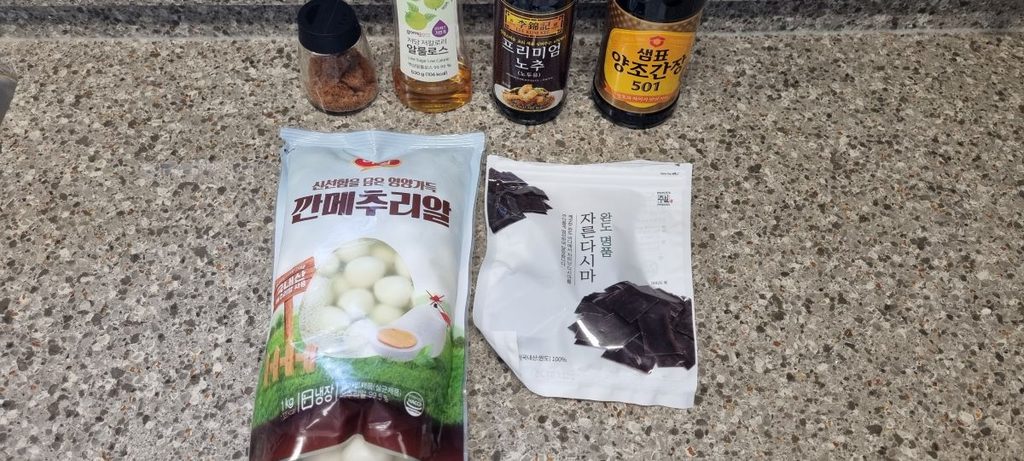
Let me walk you through what ingredients and tools you’ll need.
Ingredients
🔹 Peeled quail eggs – 1kg
🔹 Soy sauce – 150ml
🔹 Sugar – 100ml
🔹 Corn syrup (or rice syrup) – 100ml
🔹 Dark soy sauce (jinganjang, also labeled rohdoyu) – 1 tablespoon
🔹 Dried kelp (dashima) – 3 to 5 pieces
Tools
🔹 Strainer
🔹 Pot
🔹 Bowl
🔹 Tongs
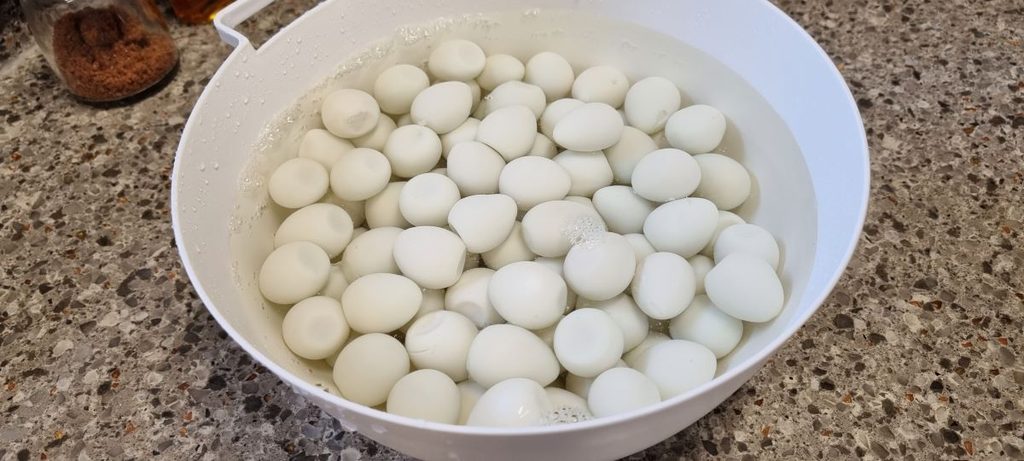
Rinse the quail eggs under running water 2 to 3 times. Since they’re already peeled, you can go ahead and cook with them as they are.
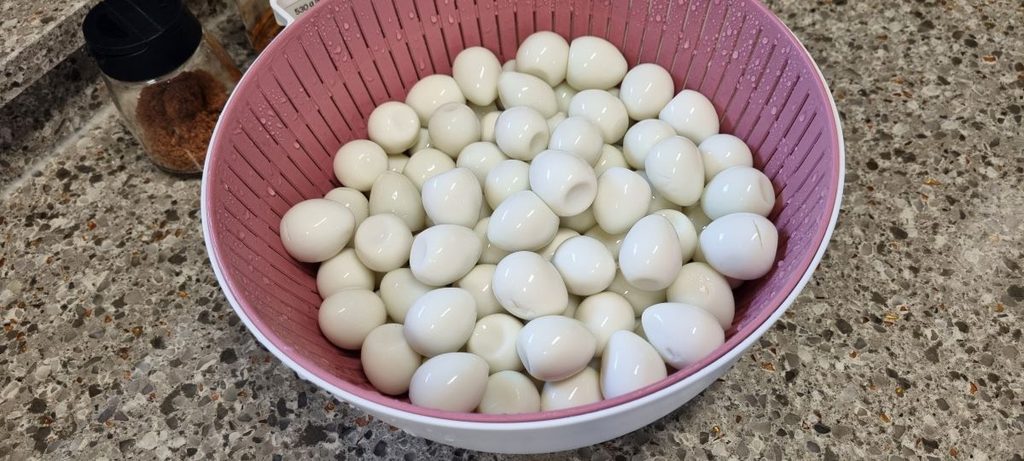
Set the rinsed quail eggs aside for a moment. I put mine in a strainer to drain off the excess water.
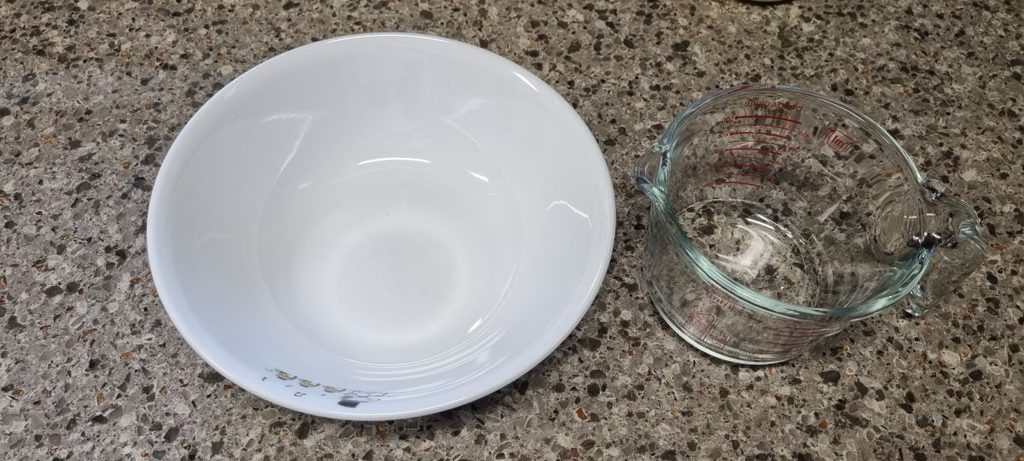
Now let’s make the soy sauce glaze. Grab a measuring cup and a large bowl.
Water – 600ml
Soy sauce – 150ml
Sugar or allulose – 100ml
Corn syrup – 100ml (if you don’t have it, sugar works as a substitute)
Dark soy sauce – 1 tablespoon (this is just for color, so feel free to skip it if you don’t have any)
To sum it up, you’re mixing water, soy sauce, and sugar together. Once it’s mixed, taste a little of the glaze. It shouldn’t taste too salty, it should lean sweet instead. If it tastes too salty, add a bit more water. That’s because as the glaze simmers down, it reduces and the saltiness gets more concentrated, so you don’t want to start off too salty.
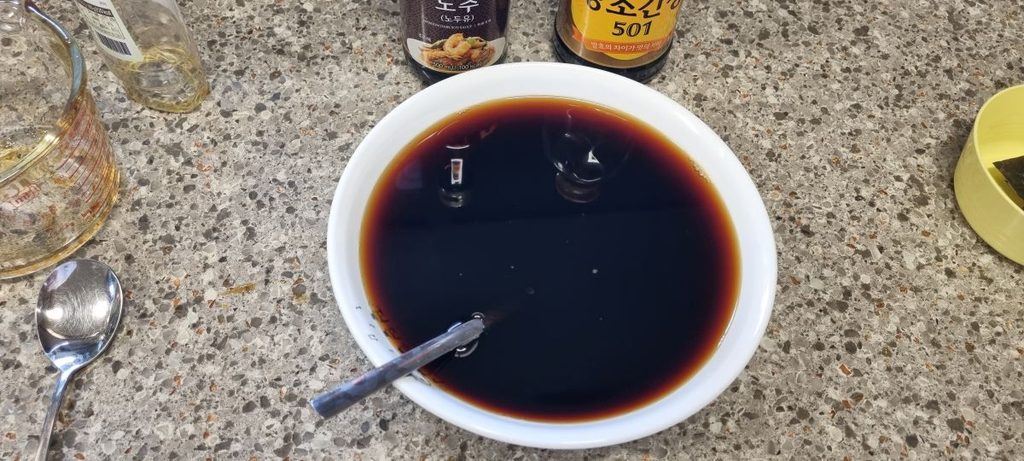
Stir the glaze together well, and get a pot that’s just big enough for the quail eggs and the glaze to be fully submerged.
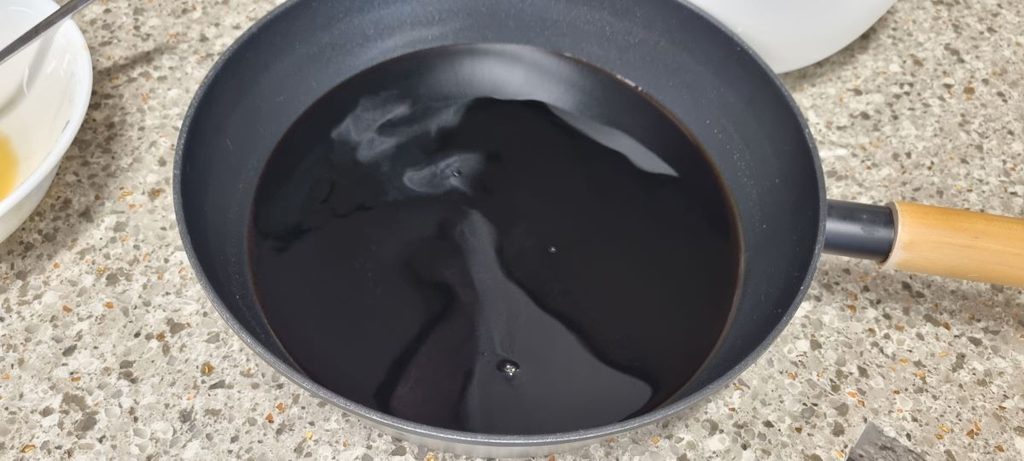
Pour the soy glaze into the pot, then add in the quail eggs. Toss in 2 to 3 pieces of dried kelp too (if you don’t have any, feel free to skip it). At this point, everything’s still off the heat, we’re just getting it all into the pot before turning on the stove.
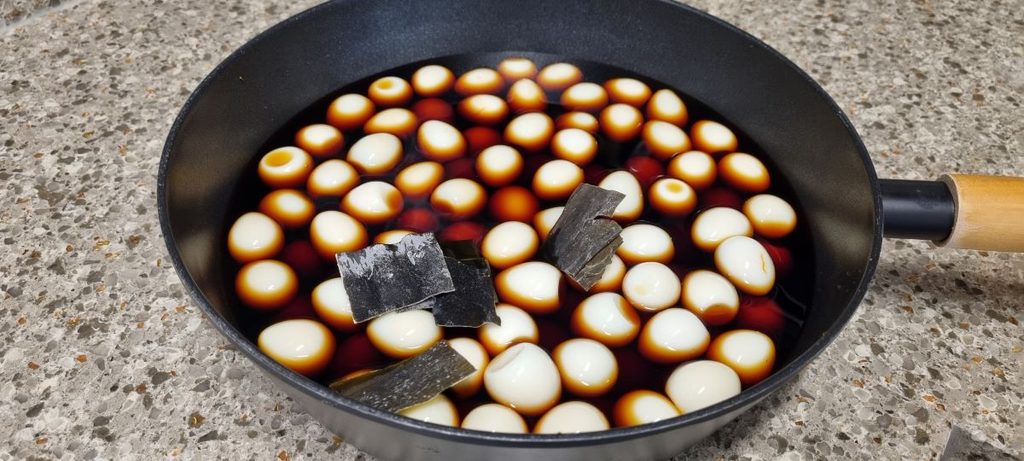
Now put the pot on the stove. Start with medium-low heat. When you’re braising something like this, you never want to crank up the heat. Keep it low and let it simmer gently so the glaze has time to soak into the quail eggs properly.
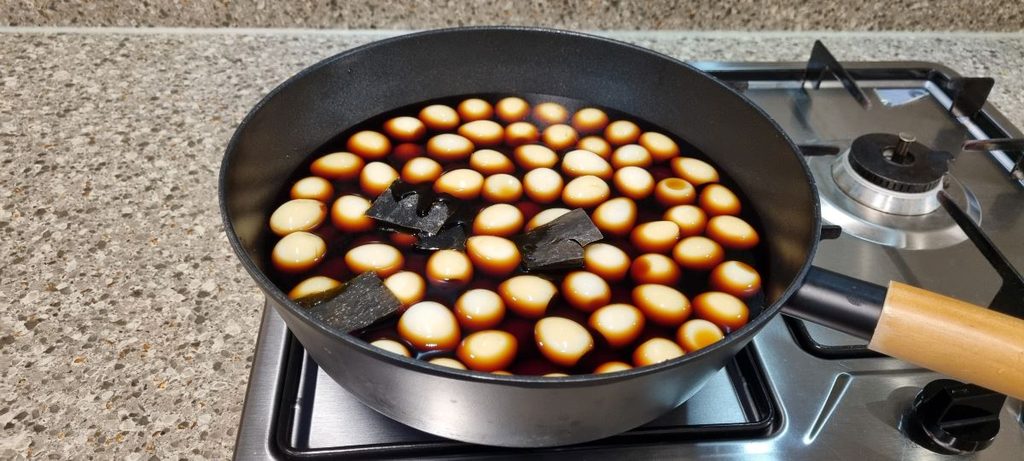
As soon as the glaze starts to boil, take out the kelp right away. If you leave kelp in too long, it turns bitter and gives off an unpleasant, astringent taste, so keep its cooking time short.
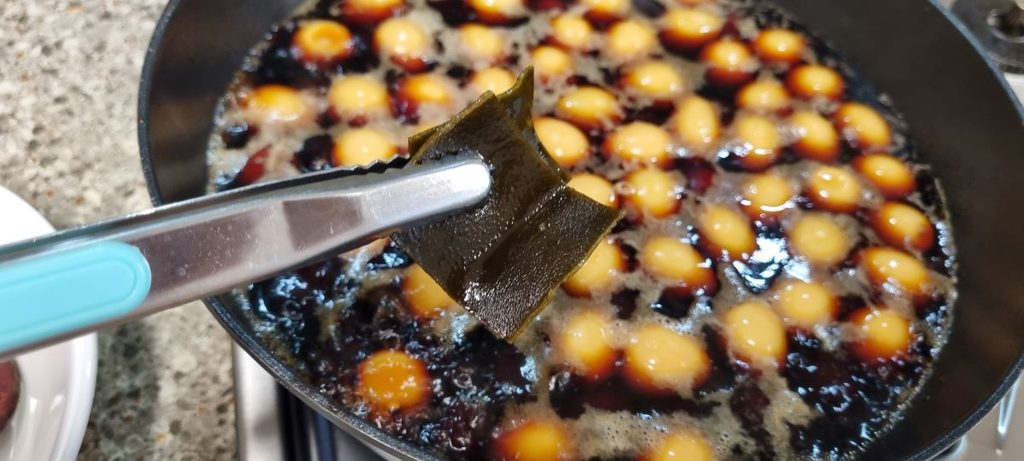
Once you’ve pulled out the kelp, turn the heat down to low. From here, just let it keep simmering gently on low.
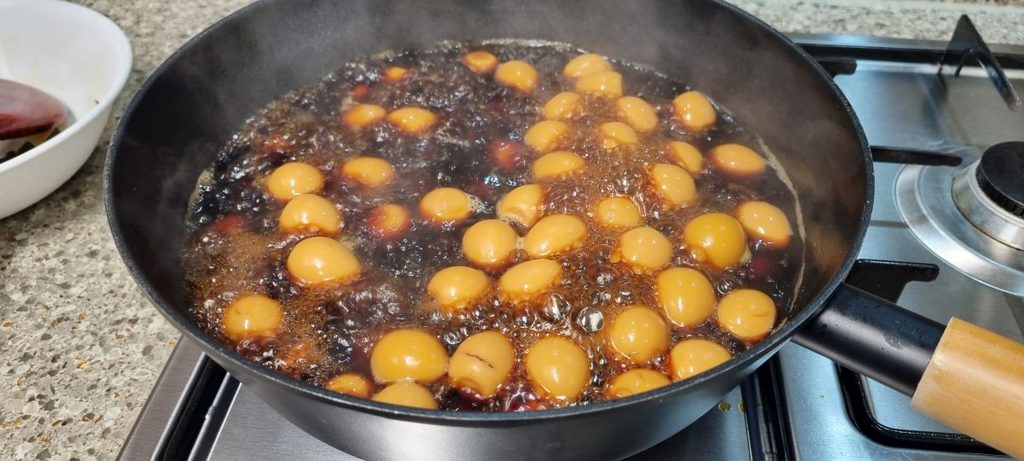
So how long should you let it simmer? Keep going until the glaze has reduced down to about half its original volume, which usually takes around 15 minutes. Just be careful not to over-reduce it, since simmering it too long makes it taste overly salty.
One more thing to keep in mind: once you refrigerate the finished jangjorim, the glaze keeps soaking further into the quail eggs over time, so you don’t want to make it too salty from the start.
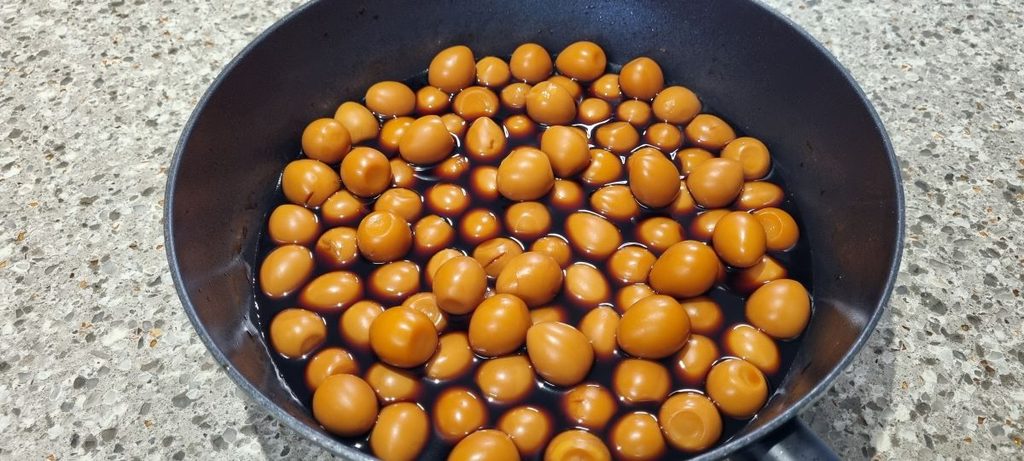
And that’s it, your quail egg jangjorim is ready. You can eat it right away, but if you let the pot sit out at room temperature for 30 minutes to an hour after cooking, it actually tastes even better.
If you’re storing it in the fridge, let it cool down to room temperature first, then transfer the quail eggs into an airtight container along with enough of the glaze to fully submerge them.
Quail egg jangjorim has a sweet, salty flavor with the soft, tender bite of the quail eggs, and it pairs perfectly with a bowl of steamed rice.
My favorite way to eat it is to put a pat of butter on top of a bowl of rice, add the quail egg jangjorim along with some of the soy glaze, and mix it all together. Even on days when I don’t have many other side dishes on hand, this alone makes for a seriously satisfying meal. 🙂